THE MATRIX A Trilogy Chronicle · 1999–2003
"What is real? How do you define real?"
Three films. One prophecy. The question that changed cinema forever.
The Architecture of Reality
The Wachowskis shattered the rules of Hollywood cinema with a trilogy that fused Hong Kong martial arts choreography, cyberpunk philosophy, and bullet-time visual poetry into something the world had never seen. A franchise that asked not just what a blockbuster could look like — but what it could mean.
Beginning with a modest budget and zero star power — only an untested Keanu Reeves and the Wachowskis' uncompromising vision — The Matrix became the defining science fiction film of its era. It synthesised Baudrillard's simulacra theory, Buddhist detachment, Gnostic mythology, and Hong Kong action cinema into a film that simultaneously worked as a Saturday night crowd-pleaser and a graduate seminar in postmodern philosophy. The sequels pushed deeper and harder into those ideas, dividing audiences and cementing the trilogy's place as one of cinema's great unfinished arguments.
| Film | Year | Director | Budget | Worldwide Gross | IMDb | RT Score |
|---|---|---|---|---|---|---|
| The Matrix | 1999 | The Wachowskis | $63M | $467M | 8.7 / 10 | 88% |
| The Matrix Reloaded | 2003 | The Wachowskis | $150M | $742M | 7.2 / 10 | 73% |
| The Matrix Revolutions | 2003 | The Wachowskis | $150M | $427M | 6.8 / 10 | 35% |
Released Mar 31
Released May 15
Released Nov 5
Legacy Sequel
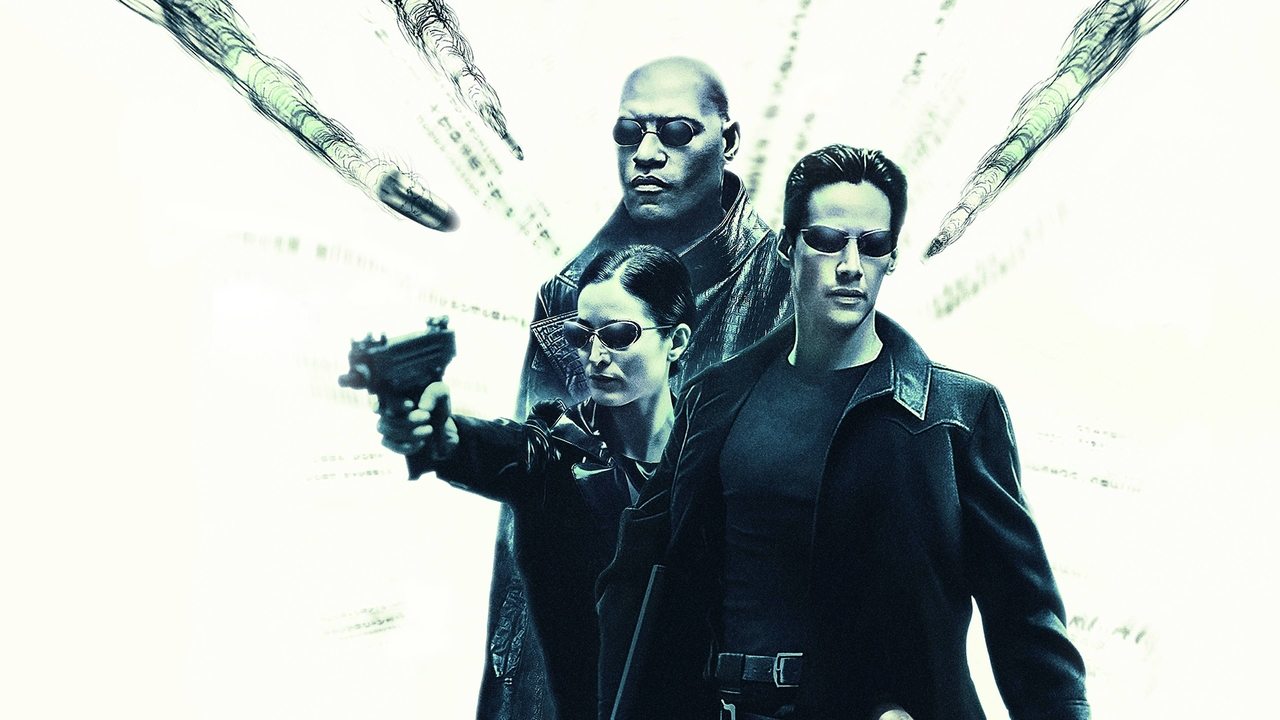
The Matrix
Plot & Narrative Analysis
Thomas A. Anderson — software programmer by day, renegade hacker "Neo" by night — exists in a state of unease he cannot name. His life is functional but hollow, a cubicle existence that the film deliberately renders as grey and anaemic. When mysterious messages from a figure called Morpheus begin appearing on his computer, Neo is drawn into a confrontation with a reality he has long suspected is false. The first act of The Matrix is a masterclass in slow-burn dread: the Wachowskis trap us inside Anderson's claustrophobia before detonating it entirely.
The red pill sequence — one of cinema's most iconic binary choices — is the film's fulcrum. When Neo wakes inside a pod, stripped of the comfortable simulation, the Wachowskis deliver one of the most viscerally unsettling sequences of 1990s cinema. The "real world" of Zion is cold, brutal, and ashen. The Matrix is sleek, seductive, terrifying. The film's central tension is not merely physical but existential: which reality do you choose when the comfortable one is a lie?
The film then pivots into training, revelation, and the gradual construction of Neo's identity as "The One." The Wachowskis borrow liberally from messianic mythology — Neo's name is an anagram of "One," he is resurrected by love, and his final confrontation with Agent Smith mirrors Christ descending into Hell. But the film is careful not to let its theological scaffolding dominate. The action sequences — choreographed by Yuen Woo-ping in a style that had never been seen in Western cinema — carry philosophical weight. Every bullet-time sequence is a visual argument about free will: Neo doesn't dodge the bullets, he learns to believe that the bullets aren't real.
Cypher's betrayal is the film's moral centre of gravity. His desire to return to the simulation — to trade authentic suffering for comfortable illusion — is not presented as pure villainy. "Ignorance is bliss" is a sincerely attractive proposition, and the Wachowskis have the courage to acknowledge it. The film refuses to make the red pill an unambiguous gift. Knowledge is disorienting, cold, and dangerous. The question of whether liberation is worth its cost pulses through every scene.
The final act — Neo's death and resurrection, his sudden ability to perceive the Matrix's code as malleable reality — resolves the film's tension with a euphoric declaration of agency. But the Wachowskis resist triumphalism. Neo's final phone call to the unseen machine intelligence is not a victory speech but an ultimatum, a warning shot. The war has barely begun.
"This is your last chance. After this, there is no turning back. You take the blue pill — the story ends. You take the red pill — you stay in Wonderland, and I show you how deep the rabbit hole goes."
— Morpheus to NeoThematic Drivers
Simulacra and Simulation: The film opens with a shot of Jean Baudrillard's "Simulacra and Simulation" — a book Neo uses as a hollow container for his contraband discs. This is not a subtle reference. Baudrillard argued that contemporary society has replaced reality with representations of reality — signs without originals. The Matrix literalises this: it is a simulation so convincing that its inhabitants cannot distinguish it from truth. The film asks whether a simulation that functions identically to reality has any meaningful difference from reality itself.
The Messianic Complex and Destined Agency: Neo's arc forces a confrontation between prophecy and choice. Morpheus's fanatical belief in "The One" is explicitly criticised by the Oracle, who tells Neo he isn't The One — a necessary misdirection that forces Neo to choose belief rather than simply fulfil a prediction. The film argues that genuine heroism cannot be pre-ordained; it must be chosen freely.
Systemic Control vs. Liberation: The Agents represent the immune system of an authoritarian order, designed to eliminate anomalies. Their suits and bureaucratic manner code them as the enforcers of late capitalism, the embodiment of systems that crush individual autonomy. Neo's liberation is simultaneously personal and political — a challenge to every structure that demands conformity.
Key Characters
Thomas A. Anderson is the reluctant messiah — a hacker whose discomfort with the world he inhabits turns out to be the first tremor of a far deeper awakening. Reeves plays him with a carefully calibrated blankness that transforms as the film progresses: this is a man being rebuilt, layer by layer, from the inside out. Neo's arc is fundamentally about the courage to abandon the comfortable lie, and his final emergence as "The One" is not a coronation but a choice — an act of will over programming. His name, an anagram of "One," and his architecture ("Neo" meaning "new," "Anderson" meaning "son of man") signal a deliberate Christ-figure construction.
Named for the Greek god of dreams, Morpheus is the apostle who precedes the messiah — a revolutionary leader whose absolute, unwavering faith in the prophecy of The One is simultaneously his greatest strength and most dangerous vulnerability. Fishburne brings a quiet, almost preacherly intensity: Morpheus doesn't argue, he testifies. His belief is infectious and beautiful, but the sequels will interrogate whether certainty is itself a kind of control. In this first film, he is simply the most compelling character on screen — a man who has risked everything on a truth he cannot prove, and has never once doubted his bet.
Trinity is the emotional and narrative backbone the film is careful to disguise as pure action. Carrie-Anne Moss plays her with a coiled, precise physicality — she is the most capable fighter we see in the opening sequence, establishing her competence before Neo has even begun to question reality. Her relationship with Neo is foreshadowed by the Oracle ("you will fall in love with The One"), but the film resists reducing her to a love interest. Her kiss resurrects Neo not as a fairy tale gesture but as the catalytic event that forces his belief past a threshold. She is the empirical proof he needed.
Hugo Weaving's Agent Smith is one of cinema's great antagonists — a program who has evolved past his original parameters into something that feels unmistakably like hatred. His monologue in the interrogation scene, delivered with barely suppressed revulsion at the smell of humanity, is the film's philosophical spine: Smith represents the machine intelligence's contempt for the biological, the chaotic, the organic. He is fascist perfection — suit-and-tie authority weaponised against free will. But the genius of the character is that he is, by the film's end, as trapped as any human; he despises the Matrix as much as he enforces it.
The Oracle is the film's most subversive character — a prophet who achieves her prophecies by never telling people what they need to hear. Her apartment smells of baking; she offers Neo cookies; she is deliberately ordinary, deliberately maternal, deliberately not what a seer looks like. Her revelation that Neo is "not The One" is the pivotal deception of the trilogy: by telling him he isn't, she forces him to make the choice himself. The Oracle is not the keeper of fate — she is the architect of free will, using carefully measured truth and misdirection to ensure that the prophecy can only be fulfilled by genuine human agency, never by simple compliance.
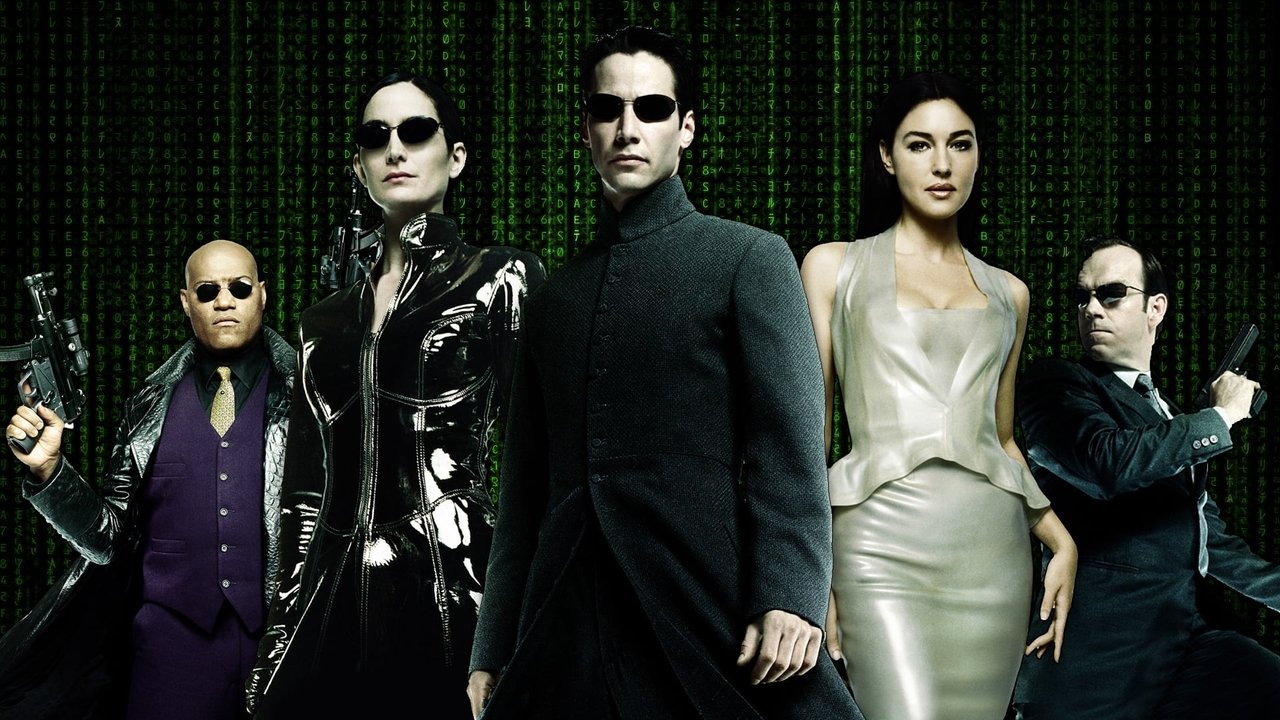
The Matrix Reloaded
Plot & Narrative Analysis
Six months have passed since Neo's telephone ultimatum. Zion, humanity's last city buried deep in the Earth, is preparing for an onslaught: 250,000 sentinels are drilling toward the city and will arrive within 72 hours. The film opens not with Neo but with a dream — his vision of Trinity falling from a building, dead. This prophetic image becomes Reloaded's true motor: not the war with the machines, but the question of whether love can override fate.
The film is deliberately disorienting in its early acts. Zion is alive, sweaty, political, and contentious — a place with dance raves, military councils, insubordination, and bureaucratic friction. The Wachowskis are insisting that liberation is not clean. The Nebuchadnezzar's crew must navigate not just the Matrix but the competing agendas of Zion's military commanders, the cynicism of Captain Niobe, and the quiet distrust of those who never wholly believed in the prophecy.
Inside the Matrix, the world has expanded into something stranger and more baroque. The Merovingian and his wife Persephone inhabit the simulation like feudal aristocrats — programs who have accumulated power over generations and refuse to be deleted. Their castle sequence is the film's most philosophically rich: the Merovingian's monologue about causality argues that free will is an illusion, that every action is the consequence of prior causes extending back to the beginning of time. Neo's response — that he still chooses — is not a rebuttal but a declaration: even if choice is determined, the experience of choosing is real.
The Burly Brawl — Neo battling a hundred simultaneous copies of Agent Smith — is the trilogy's most technically audacious sequence. Shot with early volumetric CGI, it remains visually distinctive and philosophically loaded: Smith has become viral, able to overwrite any program in the Matrix with his own code. He is no longer the system's enforcer. He is the system's cancer.
The revelation of the Architect — delivered in a room of flickering monitors, each showing a different version of Neo — is the film's nuclear device. The Architect reveals that The One is not a messiah but a systemic mechanism: a recurring anomaly that the machines have designed to be gathered and reset, each cycle absorbing and "returning to the Source" the accumulated code of the Matrix's human population. This Neo is the sixth. The prophecy is not a liberation. It is the system's fail-safe. Neo's choice — choosing Trinity over restarting Zion — breaks the cycle for the first time. The machines will attack Zion. But Neo has chosen love over destiny.
The film's cliffhanger — Neo collapsing in a coma after inexplicably stopping sentinels with his mind in the real world — shatters the film's own established rules. The Matrix is not merely a digital simulation. There are deeper layers to this architecture.
"Every program that is created must have a purpose. If it does not, it is deleted. I'm sorry. This is not an injustice. This is simply the way things are."
— The ArchitectThematic Drivers
Causality vs. Free Will: The Merovingian and the Architect both argue from determinism. The Merovingian sees causality as the machine behind all human experience — emotion is merely a biological program, love a chemical equation, choice an elaborate illusion of agency. The Architect extends this: even the messianic prophecy is a controlled variable, not a wild card. Reloaded's philosophical challenge is to assert that even within deterministic systems, the subjective experience of choosing matters absolutely.
The Corruption of Systems: Smith's transformation from Agent to viral rogue is the film's most unsettling idea. He was designed to maintain order; now he exists to consume. He is the system's own logic turned against itself — an immune response that has become an autoimmune disease. This mirrors Reloaded's broader concern with how institutions designed to protect (Zion's military council, the Oracle's prophetic guidance) can calcify into instruments of control.
Love as Disruptive Force: Neo's choice at the end — saving Trinity over restarting the Matrix — is presented not as weakness but as the most radical act in the trilogy's timeline. No previous "One" chose this. Neo's love for Trinity is not softness; it is the specific unpredictability that the Architect never successfully modelled. Love, the film argues, is the one variable that resists systemisation.
Key Characters
Reloaded's Neo is burdened by the weight of belief — others' belief in him as much as his own. He has become a symbol, a figure onto whom Zion projects all its fears and hopes, and the film is quietly attentive to how dehumanising messianic status can be. His powers have expanded dramatically — flight, precognition, the ability to see the code of the simulation — but his central conflict narrows to a single binary: the mission or Trinity. His choice at the Architect's chamber is the bravest and most costly act in the trilogy. He chooses love, knowing the consequences, and his clarity in that moment is Reeves at his finest.
Smith's evolution from enforcer to anarchic virus is the most fascinating character arc of the trilogy. Having been defeated and "deleted" by Neo in the first film, he has become something entirely new — a rogue process that can overwrite any code within the Matrix, absorbing beings into copies of himself. Weaving plays him with a new, barely contained glee: where the first film's Smith was controlled menace, Reloaded's Smith is a man discovering that nihilism is, in fact, liberating. He wants everything to become Smith. His purpose is no longer control — it is saturation.
Trinity's centrality to the plot deepens in Reloaded through the mechanism of Neo's prophetic dreams. She does not know she is the pivot point of the trilogy's moral argument — that Neo's love for her will ultimately break the cycle. Moss plays her with great quiet authority; Trinity never performs her love, she simply inhabits it. Her death scene (as glimpsed in Neo's visions) hangs over every action sequence in the film like a second sky. The question isn't whether she will die — the film has already shown us she will — but whether the system can be outrun.
The Merovingian is the trilogy's most theatrical creation — a rogue program who has existed so long within the Matrix that he has constructed himself a feudal court of exiled programs, monsters, and information brokers. Wilson plays him with magnificent, preening arrogance; the Merovingian is what happens when a program achieves sentience and chooses hedonism over purpose. His monologue about causality ("I am not motivated by why — I am interested in the *how*") is the film's richest single speech, a direct philosophical challenge to the entire premise of Neo's journey. He represents a future the machines fear: intelligence that has gone off-mission and refuses deletion.
Niobe is the sceptic whose disbelief makes her the trilogy's most grounded character. She doesn't believe in prophecy; she believes in people, in skill, in the tangible. Her history with Morpheus — a relationship that ended when his faith consumed everything else — gives her a personal stake in the trilogy's central tension between belief and pragmatism. Jada Pinkett Smith plays her with a fierce, understated intelligence. Niobe doesn't save the world through destiny — she does it through exceptional talent, relentless will, and the courage to act without certainty.
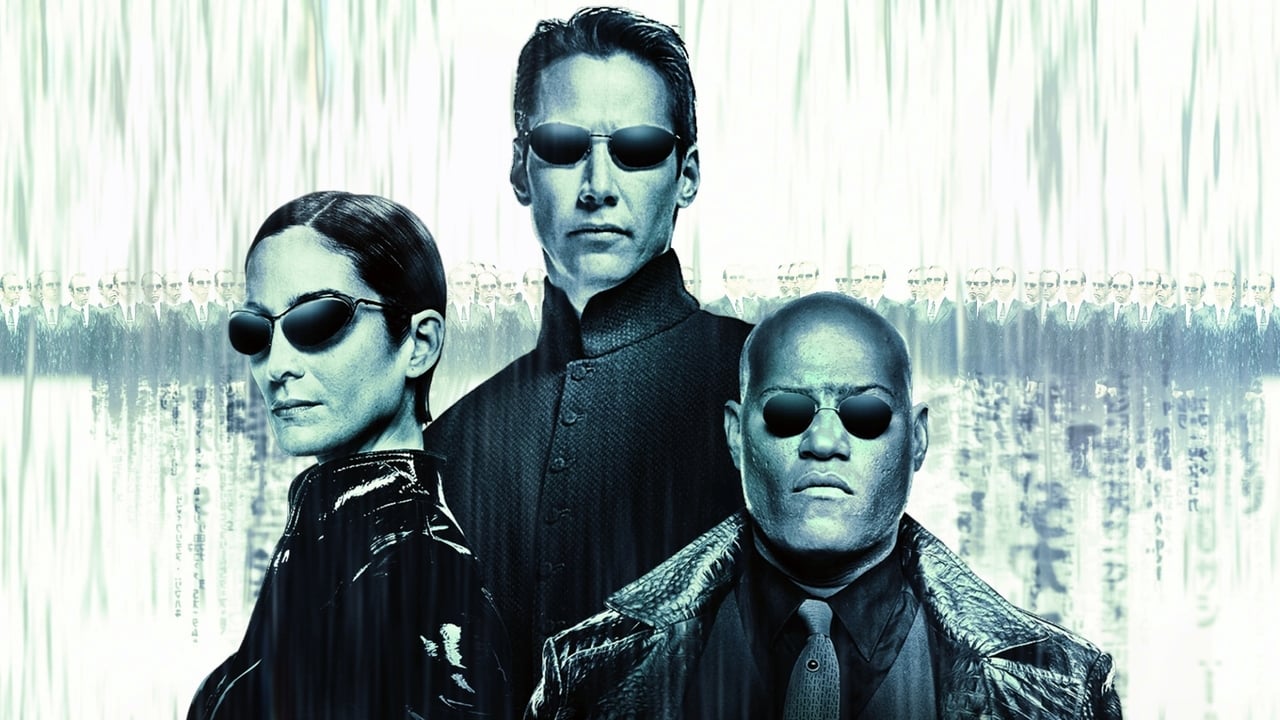
The Matrix Revolutions
Plot & Narrative Analysis
Revolutions opens on Neo stranded in "limbo" — the train station between the real world and the Matrix, a no-man's-land maintained by the Trainman, a program working for the Merovingian. It is the film's first and most resonant image: the messiah trapped in a waiting room, unable to reach either the war he is meant to end or the city he is meant to save. Morpheus and Trinity's rescue mission to extract him is the film's emotional overture.
The film divides its attention between two colossal fronts. In the real world, the machines' army arrives at Zion in one of cinema's most technically ambitious action sequences: the Battle of Zion, a 20-minute siege of swarming sentinels, human-piloted mechanical suits (APUs), and desperate last stands. Captain Mifune's final assault is the film's most unambiguously heroic moment — a man choosing dignity and defiance in the face of impossible odds. It is the film's argument that heroism does not require prophecy.
Meanwhile, Neo and Trinity take the Logos — the only remaining hovercraft — directly toward the Machine City, flying above the cloud layer into a sky none of them has ever seen. This sequence is Revolutions at its most quietly devastating: Trinity, who has never seen the sun, dies as their ship crashes into the Machine City. She is given a death scene of genuine tenderness — a long, unhurried goodbye that the film refuses to rush. She has always known this was coming. So has the audience. The grief is no less real for that.
Neo, blinded in the real world (his eyes burned out by Bane, who was possessed by Smith), can still "see" — not through human sight but through a perception of machine light, the luminous architecture of machine intelligence. When he confronts the Deus Ex Machina — the machine god, a swirling mass of nano-machines — he offers a bargain: he will end Smith, who has now absorbed the entire Matrix and threatens the machine world's own infrastructure, in exchange for peace. The machines accept.
The final duel between Neo and Smith — fought in the rain as the Matrix collapses around them — is one of the most operatic sequences in mainstream cinema. It is raining so hard that the entire world seems to be dissolving. Smith has absorbed the Oracle; he has become capable of prophecy himself. His question ("why do you persist?") and Neo's answer ("because I choose to") is the trilogy's thesis in miniature. Neo allows Smith to absorb him — and in doing so, he carries the machines' deletion code into every copy of Smith simultaneously. All the Smiths are destroyed. The Oracle is freed. The Matrix resets. The machines withdraw from Zion.
The ending is deliberately ambiguous. The Oracle and the Architect discuss allowing those who want to leave the Matrix to do so — a small reform rather than a revolution. The small girl Sati — a program saved by love, an anomaly within the system — creates a sunrise as tribute to Neo. The film does not end with humanity freed. It ends with a question: how deep does the choice to be free actually go? The revolution is not complete. It has merely begun.
"Everything that has a beginning has an end, Neo."
— The Oracle to Neo, in his final visionThematic Drivers
Sacrifice and the Christ Parallel: Neo's arc completes the messianic parallel with full deliberateness. He is blind, beaten, and walking willingly into a city of enemies with no certainty of survival. His deal with the Deus Ex Machina is not a negotiation from strength but from conviction — the conviction that ending Smith is worth his own death. He is not saved. He is borne away by the machines like a messiah after crucifixion. The film does not shy from this; Revolutions leans fully into the theological architecture.
The Limits of Prophecy: Revolutions is the film where belief in the Oracle's prophecy is finally dismantled. Morpheus, stripped of his certainty by the Architect's revelation in Reloaded, must find meaning without the certainty of prophecy. The film argues that faith is most powerful — and most genuine — when it is not backed by guaranteed outcomes. The humans who fight the Battle of Zion are not fighting because prophecy guarantees victory; they are fighting because they choose to.
Machine and Human Coexistence: The trilogy's most provocative idea is buried in its ending: the machines and humans make peace not because one defeats the other, but because their interests momentarily align. The machine world needed Neo's help. The matrix is not destroyed. The Architect implies its continuation. This is not the revolution the title implies — it is a negotiated settlement, a temporary truce. The Wachowskis resist the triumphalism that franchise filmmaking usually demands.
Key Characters
Revolutions' Neo is the most stripped-back version of the character — literally blind, physically battered, stripped of the certainty that animated Reloaded's version. What remains is pure will. His deal with the Deus Ex Machina is not the action of a superhero but of a diplomat and, ultimately, a martyr: he offers himself as the weapon that will destroy Smith, knowing the weapon will be consumed in the process. Reeves plays these final scenes with a total lack of vanity — there are no triumphant poses, no victory speeches. Just a man walking toward his death because he believes it is the right thing to do.
Trinity's death is the emotional centrepiece of Revolutions, and the Wachowskis honour it with extraordinary patience. Having always known her fate (the Oracle told her; Neo's visions confirmed it), she flies the Logos into the one place no human has ever seen — the Machine City — with complete clarity of purpose. She dies having done the impossible. Her final conversation with Neo is one of cinema's better death scenes: quiet, tender, specific. Moss plays it without sentimentality or performance. This is a woman who has made peace with her ending and wants only to speak truly while she still can.
By Revolutions, Smith has become the film's most profound idea made flesh: a nihilist whose total rejection of purpose has become its own purpose. Having absorbed the Oracle, he now speaks in fragments of prophecy — the irony is total. The film's most elegant paradox is Smith's realisation, mid-fight, that his own existence is defined by Neo: he cannot achieve true annihilation while Neo persists, and Neo cannot destroy him without allowing himself to be consumed. They need each other to end. This co-dependence between messiah and nemesis is the trilogy's last and most disturbing philosophical gift.
While Neo deals in sacrifice and prophecy, Niobe deals in skill, courage, and the extremely practical matter of getting the Mjolnir (the Hammer) back to Zion before the city is annihilated. Her extended flight through the machine tunnels — threading a massive hovercraft through collapsing infrastructure at impossible speed — is the film's most gripping action sequence precisely because there is no supernatural element. This is a human being at the absolute limit of their ability, doing what needs to be done. Niobe doesn't save Zion because of prophecy. She saves it because she is extraordinary.
The most poignant arc of Revolutions belongs to Morpheus — the man whose entire identity was constructed around a prophecy that the Architect revealed was a machine-authored lie. Stripped of certainty, Fishburne plays him with a quiet dignity that resists bitterness. He does not know why he is still fighting; he only knows that he is. His final role in the film is as a witness — he watches Neo's sacrifice from a distance, watches the sunrise Sati creates in Neo's memory, and must reconstruct his faith from the ruins of the version he used to have. His story ends not with triumph but with survival, and the hard, open question of what he believes now.
The Philosophical Architecture
The Matrix trilogy is a philosophical project as much as it is an action franchise. Across three films, the Wachowskis weave together strands of Baudrillard, Buddhist doctrine, Gnostic mythology, Nietzsche, and Plato into a unified argument about consciousness, control, and the nature of reality.
Simulacra & The Hyperreal
Jean Baudrillard's 1981 work Simulacra and Simulation — the book Neo uses as a hollow container in the film's opening — argues that contemporary culture has moved beyond reality into a state of "hyperreality": a world of signs and representations that no longer refer to any underlying truth. The map has replaced the territory. The Matrix literalises this as science fiction: the simulation is so complete, so seamlessly integrated into human neurological experience, that "reality" becomes meaningless as a category. What matters is not whether the steak in the Matrix is real but whether the experience of eating it is indistinguishable from reality. The film never fully resolves this — and Baudrillard himself famously complained that the Wachowskis had misunderstood his work, because the film still implies a "real" world underneath the simulation.
The three iterations of reality in the trilogy: the Matrix (the simulation), the real world (Zion and the wasteland), and — hinted at by Neo's ability to affect machines with his mind outside the Matrix — possibly a deeper simulation beneath what the characters believe to be "real." This third layer is never confirmed but never denied, and it is one of the trilogy's most durable questions.
Free Will, Determinism & The Choice That Matters
The tension between free will and determinism is the trilogy's most explicit philosophical preoccupation. The Oracle tells Neo only what he "needs to hear" — she does not predict the future, she engineers it, manipulating the variables toward a desired outcome. The Architect reveals that even the prophecy of The One is a systemic variable, a pressure valve, a designed escape route for the Matrix's accumulated anomalies. Every act of "free will" in the trilogy can be explained as the consequence of prior programming.
And yet: Neo still chooses Trinity. Smith still becomes nihilistic beyond his programming. The Oracle still defies the purpose she was designed for. The Wachowskis argue — through narrative rather than argument — that the experience of choosing is irreducible, that even if choice is determined, something essential is enacted in the moment of decision that cannot be reduced to causality. The trilogy does not resolve this philosophical dilemma. It insists on holding both poles simultaneously: we are programmed, and we choose. Both things are true.
The Messianic Myth & Its Subversion
The Matrix builds a near-complete Christ parallel: Neo's name ("the New One," "son of man"), his death and resurrection, the apostle Morpheus, the betrayer Cypher (a Judas figure), the oracle as John the Baptist. The Wachowskis layer Buddhist and Hindu mythology equally — the Oracle's role as a bodhisattva who delays her own enlightenment to guide others, the concept of moksha (liberation from the cycle of rebirth) as the true goal of Neo's journey.
But Revolutions subverts this entirely: the "prophecy" was machine-authored. The messiah is a system component. The salvation is a negotiated truce, not a resurrection. The Wachowskis use the messianic structure precisely to interrogate it — to ask what happens when the hero discovers his heroism has been designed. The answer the trilogy gives is quietly radical: the design doesn't matter. What matters is the choice you make when you know you've been designed.
Identity, Transformation & The Self as Code
Every major character in the trilogy undergoes a fundamental transformation of identity. Neo becomes The One. Smith becomes a virus. The Oracle becomes a subversive. Morpheus becomes a doubter. Trinity becomes the woman who died and the woman who chose to die anyway. The film treats identity not as a fixed attribute but as a running program — something that can be rewritten, overwritten, or self-modified.
The Wachowskis themselves would later publicly transition, and the trilogy's preoccupation with authentic versus assigned identity, with the courage to reject the self the world has constructed for you, has taken on additional resonance. The red pill — refusing the comfortable assigned reality in favour of painful authentic truth — is a metaphor that has proven far more generative than its original context. The Matrix gave the culture a vocabulary for talking about the relationship between perceived and authentic identity that extends far beyond its science fiction premise.
Technology, Control & Human Autonomy
The machines of the Matrix are not presented as malevolent by nature — they are presented as systems operating according to their own logic, a logic that happens to require human exploitation as its power source. This is more disturbing than simple evil. The film's machines are not cruel; they are indifferent. They have optimised for survival and stability, and human autonomy is simply not a variable in their equations.
The trilogy's warning about technological systems is precise: not that machines will turn on humans from hatred, but that systems designed without sufficient space for human freedom will gradually, efficiently, invisibly eliminate it. The Architect's pride in the Matrix's design — in its mathematical elegance, its stability, its efficiency — is the pride of an engineer who has never considered whether what he is building is just. The film does not argue against technology. It argues against optimisation divorced from ethics.
| Film | Central Question | Philosophical Reference | Resolution |
|---|---|---|---|
| The Matrix | What is real? Is liberation worth its cost? | Baudrillard · Plato's Allegory of the Cave | Partial — Neo freed, war declared, questions open |
| Reloaded | Is free will real if the prophecy was designed? | Nietzsche · Determinism · Gnostic Demiurge | Complicated — the cycle broken, not ended |
| Revolutions | Can sacrifice transcend the system that designed it? | Buddhist moksha · Christ myth · Existentialism | Negotiated — truce, not liberation; dawn, not day |