Plot & Narrative Analysis
The Dark Knight is not a sequel; it is a philosophical interrogation of Batman's entire premise. With Gotham's organized crime dismantled at the end of the first film, a new kind of chaos emerges: the Joker, a force of pure nihilism dressed in purple and war paint, intent on proving that morality is an illusion, that chaos is the universe's natural state, and that one man's principles are worthless against the probability of random entropy. The Joker is not trying to steal or dominate; he is trying to demonstrate, through orchestrated tragedy, that meaning is a comfortable lie.
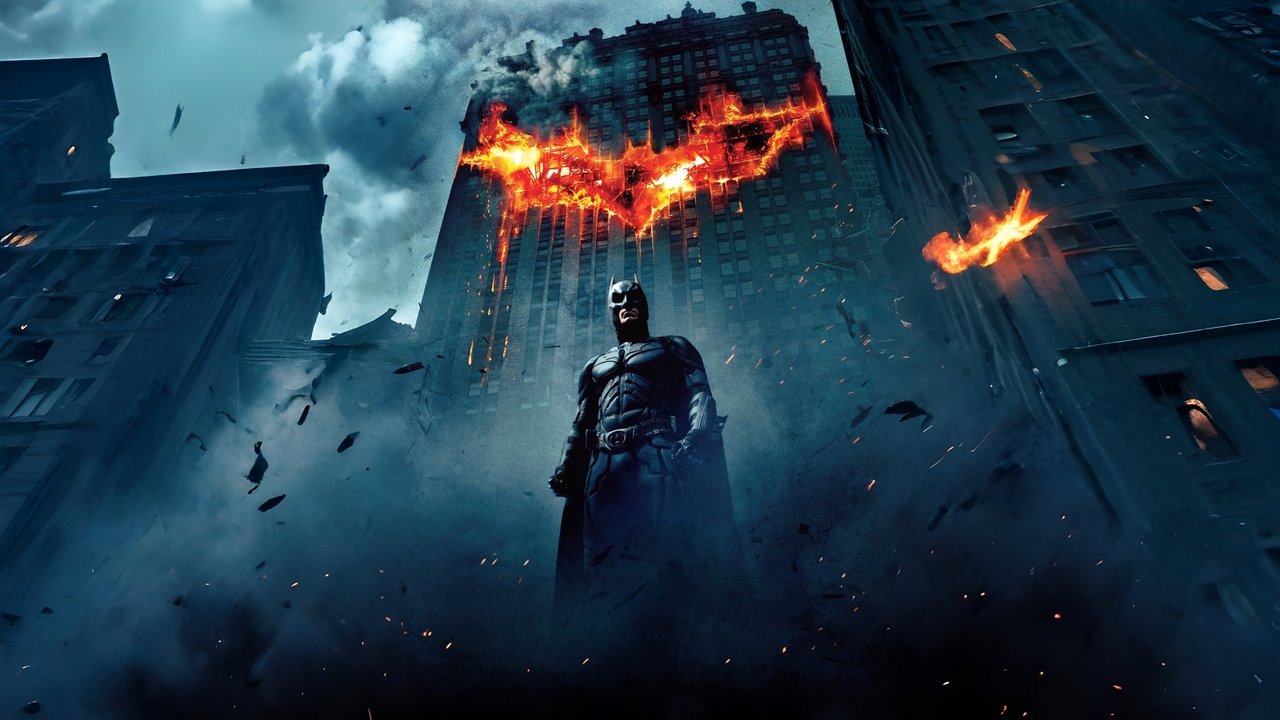
Nolan's screenplay constructs The Dark Knight as a philosophical chess game. Batman, representing order, discipline, and moral absolutes, faces the Joker, representing unpredictability, nihilism, and moral relativism. The genius of The Dark Knight is that it is impossible to declare a winner. Batman defeats the Joker physically, yet the Joker defeats Batman philosophically: he forces Batman to compromise his principles (breaching Gotham's privacy through mass surveillance), to abandon hope in Harvey Dent's redemption, and to accept that Gotham's moral center—the white knight of the DA—has become the Joker's pawn. By the film's end, Batman is no longer Gotham's hero; he is Gotham's hunted enemy.
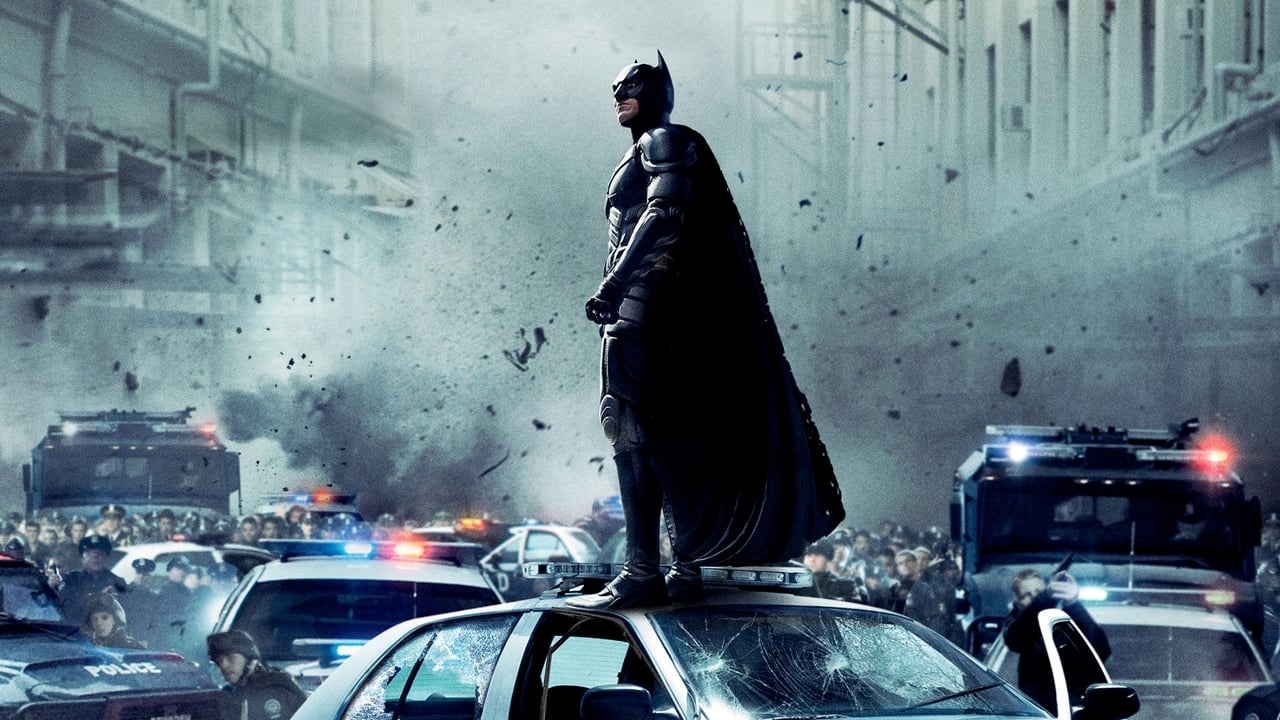
This inverts the standard superhero narrative entirely. Instead of the hero's triumph, The Dark Knight concludes with Batman accepting exile, becoming what he always feared: the symbol of Gotham's moral corruption. Yet there is strange redemption in this acceptance. Batman understands that he is not Gotham's savior but its necessary sickness—a reminder that heroism comes at a cost, and that the cost is permanent isolation.
Dark, complex, and unforgettable, The Dark Knight succeeds not just as an entertaining comic book film, but as a richly thrilling crime saga.
Rotten Tomatoes Critics Consensus
Thematic Pillars
Chaos vs. Order as Philosophical Absolutes
The Dark Knight presents chaos and order not merely as practical opposites but as fundamental metaphysical positions. Batman represents a philosophy that believes order can be imposed through will, discipline, and sacrifice. The Joker represents the philosophical position that chaos is the universe's natural state and that all attempts at order are self-delusions. Nolan does not resolve this tension; instead, he suggests that the tension itself is the condition of civilization. Batman must continue his struggle not because he can win but because the alternative—surrendering to the Joker's nihilism—is surrender to meaninglessness. This is existential heroism: choosing to struggle against cosmic indifference.
The Corruption of Symbols
Harvey Dent begins as Gotham's white knight—a prosecutor capable of destroying organized crime through law rather than vigilantism. The Joker's entire scheme is predicated on corrupting Dent, turning Gotham's symbol of hope into an instrument of vengeance. When Dent becomes Two-Face, Gotham loses not just a hero but its belief in redemption through institutional means. The film suggests that symbols are fragile—that they can be corrupted, and that their corruption is more devastating than their initial absence. By the film's end, Batman himself becomes a symbol of corruption in the eyes of Gotham, hunted and despised. Yet paradoxically, his status as a hunted, corrupted symbol is more powerful than his status as an idealized hero would have been.
The Moral Limit of Surveillance and Control
Batman's construction of a mass surveillance system through Hong Kong—converting the city's cellular network into a total monitoring apparatus—represents a Faustian bargain. To defeat chaos, Batman becomes the very instrument of totalitarianism that he claims to oppose. The Joker forces Batman to choose between freedom and safety, and Batman, choosing safety, becomes the totalitarian he feared. Yet the film complicates this judgment: the surveillance system works. It saves lives. Batman's willingness to sacrifice freedom for security suggests that heroism itself may require moral compromise, that purity is a luxury available only to those who do not act.
Key Characters
The Joker
Heath Ledger
Agent of chaos; nihilistic force intent on proving morality's futility
Heath Ledger's Joker is not a villain seeking wealth or power; he is a philosopher of chaos acting out his convictions. The Joker believes that morality is a comforting illusion that obscures the universe's fundamental meaninglessness. Every scheme, every murder, every act of terror is designed to strip away this illusion and force Gotham to acknowledge chaos as the natural state. Ledger's performance is unsettling precisely because the Joker is internally consistent—he does not contradict himself, and he does not seek to disguise his logic. His tragedy is not that he is mad but that he is sane and has reached conclusions that render human suffering philosophically justified. Ledger won a posthumous Oscar for this role because he captured something essential about nihilism: its internal coherence and terrifying plausibility.
Harvey Dent / Two-Face
Aaron Eckhart
Idealistic prosecutor whose redemption becomes Gotham's tragedy
Harvey Dent represents the possibility of systemic reform. As Gotham's white knight, Harvey believes that law can be just and can triumph over corruption. The Joker targets Harvey specifically because corrupting him destroys Gotham's last hope for institutional salvation. When Dent becomes Two-Face, he does not simply become a villain; he becomes a philosophical refutation of the order Batman has dedicated his life to imposing. Aaron Eckhart's performance captures Dent's transformation as a loss of faith—his turn to duality is motivated by despair at moral absolutes' futility. Two-Face does not contradict Harvey; he is the logical conclusion of Harvey's shattered idealism.
Batman / Bruce Wayne
Christian Bale
Gotham's protector forced to question his own morality
Christian Bale's Batman in The Dark Knight is a man watching his philosophy unravel. Where Batman Begins presented Batman as an answer to Gotham's corruption, The Dark Knight presents him as a question. Batman's moral certainties—that good can triumph, that he can inspire Gotham toward justice—are systematically dismantled. By the film's end, Batman accepts that he is not Gotham's savior but its necessary curse. Bale conveys this realization through physical and vocal exhaustion—Batman is not defeated by the Joker but worn down by the realization that heroism may be impossible.
Jim Gordon
Gary Oldman
Cop promoted to captain; ally to Batman in moral darkness
Gordon's arc in The Dark Knight is his education in moral compromise. As captain of police, Gordon must work with Batman outside the law, must conceal evidence, must accept that institutional justice is inadequate. Gary Oldman's Gordon is a man maintaining his integrity while constantly compromising it—a paradox that defines his character. By the film's end, Gordon understands that Batman must be hunted not because Batman is guilty but because Gotham needs someone to blame for its corruption. Gordon's final action—protecting the Bat signal—is an act of faith in Batman's continued necessity despite Batman's complete exile.
Rachel Dawes
Maggie Gyllenhaal
Prosecutor; moral voice caught between law and vigilantism
Maggie Gyllenhaal takes over the role and deepens Rachel's character arc from the first film. Rachel is caught between Harvey Dent and Batman—between faith in institutional law and acknowledgment of its inadequacy. Her death at the Joker's hands is not a tragedy of romantic loss but a tragedy of lost faith. She chooses Harvey, believing in redemption through law, and is destroyed for that choice. Her death destroys Harvey and reinforces Batman's conviction that personal attachments cannot survive his mission.
Lucius Fox
Morgan Freeman
Batman's technological architect; moral counterbalance
Lucius Fox represents the technological intelligence that enables Batman's mission. Yet Fox also serves as Batman's moral conscience, questioning the mass surveillance system and its implications. Morgan Freeman's measured tone suggests a man complicit in Batman's moral compromises while struggling to maintain ethical boundaries. Fox's willingness to resign rather than continue operating the surveillance system represents the last voice of institutional moral authority in the film—and Batman, needing the system, overrides Fox's objection. It is a small moment that crystallizes The Dark Knight's central dilemma: justice may require abandoning justice itself.