Written & Directed by Quentin Tarantino

Pulp
Fiction

Just because you are a character doesn't mean you have character.

1994  ·  R  ·  2h 34m  ·  Crime · Drama

Read the Chronicle

An American Masterwork

Quentin Tarantino's second feature detonated cinema like a bomb packed with pop culture, philosophy, and adrenaline. Three interlocking stories, one shattered timeline, and a gallery of criminals who talk like they've read everything and lived through nothing — until they haven't. Released at the 1994 Cannes Film Festival, where it won the Palme d'Or, Pulp Fiction remains the most discussed, most quoted, most imitated film of its generation.

$0M
Worldwide Gross
$0M
Production Budget
0
Runtime (Minutes)
0
Oscar Nominations
0
Palme d'Or Year
92%
Rotten Tomatoes
Tomatometer
96%
Rotten Tomatoes
Audience Score
94
Metacritic
Universal Acclaim
8.8
IMDb
Top 10 All Time
Category Figure Context
Production Budget $8,000,000 Financed by Miramax / Jersey Films
Domestic Gross (US & Canada) $107,928,762 First Miramax film to cross $100M
International Gross $105,999,000 Strong European performance
Worldwide Gross $213,928,762 26× its production budget
Cannes Palme d'Or Won — 1994 Jury President: Clint Eastwood
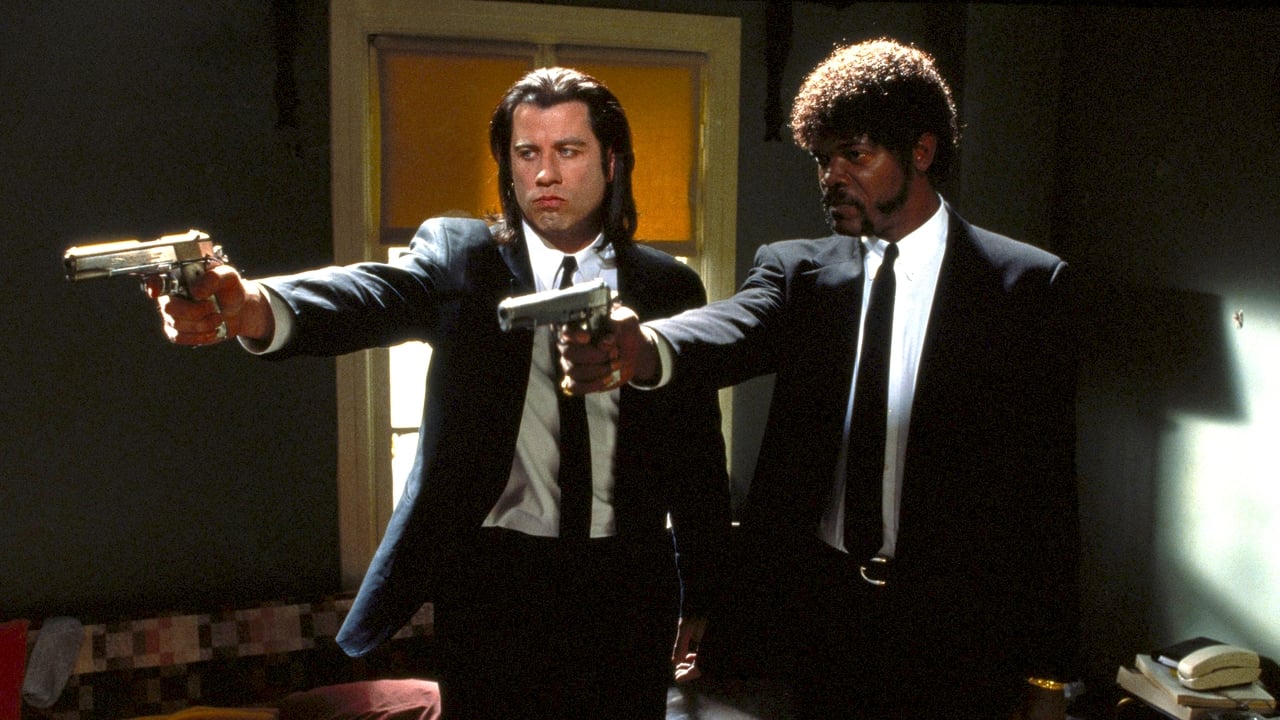
Pulp Fiction — cinematic still
Quentin Tarantino · 1994

Pulp Fiction

Written & Directed by Quentin Tarantino  ·  Cinematography by Andrzej Sekula

The Architecture of Chaos

At first glance, Pulp Fiction seems to revel in its own disorder — scenes tumble into each other without apparent respect for causality, characters who die in one sequence reappear in the next, and conversations about foot massages and fast food consume far more screen time than the violence they orbit. But this disorder is the point. Tarantino's chronological rearrangement is not a gimmick. It is the film's argument: that the universe is indifferent to sequence, that fate does not distinguish between the magnificent and the mundane, and that meaning — if it exists at all — is something we choose to read into events rather than something events bestow upon us.

The film's emotional and moral spine runs through Jules Winnfield. We first meet him as a professional killer of near-terrifying competence — calm, theatrical, unhurried. His signature recitation of Ezekiel 25:17 before an execution is not scripture but performance, a ritual that gives ceremony to murder. What transforms Jules is not one of the film's many spectacular set-pieces but a mundane miracle: bullets fired at point-blank range miss him entirely. For Jules, this is a sign. For Vincent, his partner, it is a freak occurrence. This is the film's central bifurcation — the same event, two interpretations, two radically different trajectories. Jules walks away. Vincent keeps walking toward his death.

The Mia Wallace episode — the film's most formally elegant and tension-fraught section — functions as a hall of mirrors for genre expectations. Mia appears to be the classic femme fatale: gorgeous, dangerous, married to a powerful man. But Tarantino strips away the archetype layer by layer to reveal someone genuinely lonely, genuinely odd, and genuinely funny. Her overdose, and the frantic adrenaline-shot that reverses it, inverts the usual drug-film formula. Nobody learns anything. The near-death experience produces no epiphany, no transformation. Life simply resumes, slightly accelerated.

Butch Coolidge's chapter — the film's most conventionally structured — offers its most surprising moral turn. Butch is a double-crosser, a man running from his own dishonesty, yet he is also the figure whose actions most clearly embody the film's (buried, modest, recurring) argument for decency. When he has the chance to abandon his torturer to a fate worse than death and chooses instead to return and save him, Tarantino offers something rare in American crime cinema: grace without sentimentality. The film doesn't celebrate Butch's choice or treat it as redemption. It simply notes it and moves on, as indifferent to virtue as it is to violence.

What makes Pulp Fiction endure is not its stylishness — though its stylishness is extraordinary — but its seriousness about questions that its surface treats as mere background. Is there such a thing as divine intervention? Can professional criminals have souls worth saving? Does redemption require deserving it? The film refuses definitive answers while making the questions feel urgently alive. This is its real achievement: it hides genuine moral philosophy inside a movie about people doing very bad things very stylishly.
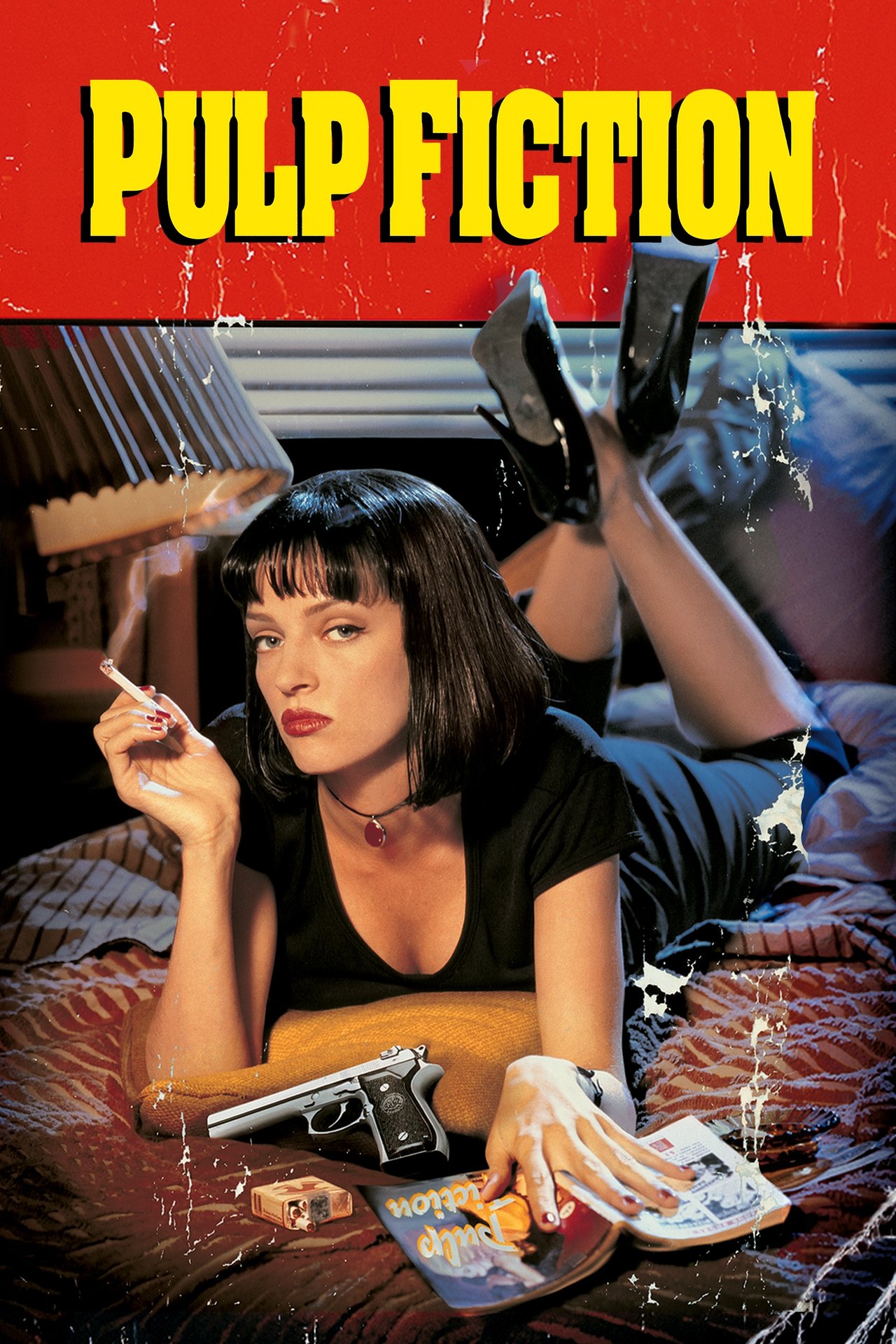
Pulp Fiction official poster
★ Rotten Tomatoes Critics Consensus

"Injecting its compendium of crime tales with the patois of everyday conversation, Pulp Fiction is a cinematic shot of adrenaline that cements writer-director Quentin Tarantino as an audacious purveyor of killer kino."

"The path of the righteous man is beset on all sides by the inequities of the selfish and the tyranny of evil men."
— Jules Winnfield (Samuel L. Jackson), Pulp Fiction, 1994

The Five Chapters

Tarantino structures Pulp Fiction as a collection of crime stories, each a self-contained chapter — yet each bleeds into the next. The film begins and ends in the same diner, bookmarking a narrative that loops and spirals rather than progresses linearly.

Prologue & Epilogue
Pumpkin & Honey Bunny

Two small-time criminals debate the ethics of restaurant robbery over coffee, then act on it — and encounter Jules Winnfield at the worst possible moment. The film's framing device, it opens with amateur criminality and closes with professional mercy.

Chapter One
Vincent Vega & Marsellus Wallace's Wife

Vincent is tasked with entertaining Mia Wallace, his boss's wife — a social minefield that escalates into genuine connection and near-fatal catastrophe. The chapter is Tarantino's most carefully observed study in mismatched chemistry and the fine line between accident and intention.

Chapter Two
The Gold Watch

Aging boxer Butch Coolidge takes a dive — and then doesn't. A watch, a suitcase of cash, and a brutal detour through a pawnshop basement form the film's most conventionally structured segment, building to its most unexpected act of honour.

Chapter Three
The Bonnie Situation

After an accidental killing in the back of their car, Jules and Vincent must dispose of a body before their friend's wife, Bonnie, returns home. The Bonnie Situation is the film's comic masterpiece — Winston Wolfe arrives, coffee is served, and a crisis becomes a protocol.

Interlude
The Briefcase

The film's central MacGuffin — a glowing briefcase whose contents are never revealed — passes between characters as an emblem of desire, danger, and the arbitrary value humans assign to objects. Whatever it contains, it's worth killing for. And maybe dying for.

Key Characters

Jules Winnfield
Samuel L. Jackson
Hitman · Marsellus Wallace's Enforcer

Jules is the film's philosophical centre and its most fully realised human being — which is remarkable, given that we first encounter him murdering people while quoting scripture. He is a man who has built his professional identity around ceremony: the suit, the ritual recitation, the deliberate, almost balletic calm with which he approaches violence. His eloquence is partly vanity, partly armour, and partly a form of genuine seriousness about the moral weight of what he does.

What transforms Jules is not the miracle of surviving bullets — it's what he chooses to do with that miracle. Where Vincent sees chance, Jules sees instruction. His decision to walk away from a life of crime is not portrayed as easy or certain: the final scene shows him still holding his gun, still dressed in his hitman's suit (borrowed from Jimmie). He is a man who has decided to change but hasn't yet figured out what change looks like. Samuel L. Jackson makes every syllable land with the weight of a verdict, transforming monologue into scripture.

Vincent Vega
John Travolta
Hitman · Jules's Partner

Vincent Vega is the film's most stylish character and its most doomed. He wears his confidence like a second suit — unhurried, unworried, convinced that he has the situation under control even as every situation slowly slips beyond it. He is, in the film's brutal moral taxonomy, a static character: someone who encounters the same signs as Jules and declines to read them. The bullets miss him too. He looks at them and shrugs.

Tarantino uses his death with devastating economy — Vincent is shot while on the toilet, a mundane humiliation for a man of such elaborate cool. John Travolta brings a physical looseness to the role that feels both period-specific and timeless: a kind of 1970s-movie-star ease that Tarantino is both celebrating and exploiting. Vincent Vega is cinema's great study in the catastrophic cost of refusing to be changed by experience.

Mia Wallace
Uma Thurman
Marsellus's Wife · Aspiring Actress

Mia Wallace is an icon masquerading as a character — and then, unexpectedly, a character revealing herself beneath the icon. She enters the film as the classic gangster's-wife-as-femme-fatale: the bob, the cigarette, the surveilling gaze from the CCTV monitors above her husband's club. Everything about her initial presentation signals danger. The genius of Uma Thurman's performance is in the slow dismantling of that danger into something stranger and more vulnerable.

Mia is not a villain or a symbol — she is a woman who tells bad jokes, wins dance contests by pure force of personality, and accidentally nearly dies of a heroin overdose because she grabbed the wrong bag. Her dynamic with Vincent is one of the great unresolved tensions of American cinema: two people who are clearly drawn to each other by something more than proximity, who are too intelligent to pretend that tension isn't there, and who are just wise enough not to act on it.

Butch Coolidge
Bruce Willis
Boxer · Double-Crosser

Butch exists in a different film from Jules and Vincent — or rather, in a different kind of film. His chapter is the most classically structured: a man running from his sins, a MacGuffin (the watch), an escalating series of complications. He is, by the film's own standards, a fairly uncomplicated figure: loyal to his girlfriend, brave when it counts, willing to break his word for money and then live with the consequences.

What elevates Butch is his final choice. He could leave Marsellus — the man who wants him dead — to unthinkable suffering. He doesn't. Tarantino gives no explanation, provides no sentimental close-up, inserts no speech about decency. Butch simply acts with honour and rides away. Bruce Willis, who was considered a major risk cast against type as a heavy, brings a weary authenticity to the role: this is a man who has been fighting his whole life and is tired of it.

Marsellus Wallace
Ving Rhames
Crime Boss · Power Itself

Marsellus Wallace is the film's gravitational centre — every major character orbits him without ever fully understanding him. He is wealthy, powerful, feared, and almost entirely absent from his own story. We know he runs criminal operations of some complexity; we know he inspires a loyalty bordering on religious devotion; we know he is capable of savage, carefully considered violence. We know almost nothing else about him.

Ving Rhames plays Marsellus as a man who has so thoroughly colonised the idea of power that he no longer needs to perform it. His most important scene — the pawnshop basement — strips away his authority completely, reducing him to pure vulnerability, and the film uses this to show us the only version of Marsellus we haven't seen: the one who can be saved, and who can receive grace from an unexpected source. He is the film's most profound study in what power does to a person — and what catastrophic exposure to powerlessness can briefly return.

Five Central Pillars

01

Redemption Without Deserving

The film's most radical theological proposition is buried inside its most violent material: that grace is not earned, it is received. Jules Winnfield doesn't become a better person by doing good things — he becomes a different person because bullets that should have killed him didn't. The arbitrariness is the point. Tarantino offers no logical explanation for why Jules survives, no backstory of secret virtue that might account for celestial intervention. The universe simply intervenes, and Jules chooses to interpret it as instruction.

This makes Pulp Fiction a profoundly unusual crime film: one in which the moral weight is placed not on punishment but on the possibility of transformation. Vincent rejects that possibility and dies on a toilet. Jules accepts it and walks into an uncertain future. The comparison is never stated, never editorialised — Tarantino trusts the audience to feel the difference without being told what to feel.

02

The Mundane Inside the Monstrous

One of Tarantino's most distinctive and divisive techniques is giving his killers interior lives stuffed with ordinary concerns. Jules and Vincent debate the metric system in the Netherlands. Butch worries about his girlfriend's blueberry pies. Winston Wolfe arrives to solve a body-disposal crisis and immediately asks for coffee with lots of cream and four sugars. The film insists that violence and normalcy are not opposites — they coexist in the same person, the same conversation, the same morning.

Critics who read this as trivialisation miss the point. Tarantino is not saying that murder is no big deal. He is saying that the people who commit murder are not monsters who have opted out of ordinary humanity — they are ordinary humans who have made specific, catastrophic choices. This is a far more disturbing vision than the sanitised villain of conventional crime cinema, and it is what keeps the film's violence from ever feeling comfortable.

03

Time as Architecture

The decision to scramble the film's chronology is not merely formal cleverness — it is Tarantino's primary philosophical statement. The nonlinear structure means we watch Vincent Vega die and then watch him alive again, ordering a burger, discussing foot massages, worrying about whether his boss will be angry. The effect is not grief but estrangement: we are forced to hold two incompatible truths simultaneously. This is the lived experience of fate — we cannot see where the timeline is going; we only know, too late, where it has been.

The film's most devastating use of time is its ending. The "final" scene — Jules choosing mercy over execution — comes, chronologically, before Vincent's death. We leave the story with hope, with an act of grace, with the suggestion of a better future. The structure denies us the satisfaction of that hope persisting. We know, because we've already seen it, that Vincent doesn't change. The hopefulness of the ending is real — and it is already, somewhere else in the film, already over.

04

Popular Culture as Moral Universe

Tarantino's characters don't inhabit a world of moral philosophy — they inhabit a world of movies, TV, music, fast food, and brand names. Their ethical frameworks are assembled from cultural debris. Jules recites what he presents as Ezekiel and it turns out to be, at best, a loose paraphrase augmented by exploitation-film energy. Mia and Vincent bond over a shared encyclopaedia of pop ephemera. Butch names his chapter after a Christopher Walken speech about a watch and its degraded, traumatic journey through Vietnam and captivity.

This is not satire or condescension — Tarantino clearly loves these characters' pop-saturated minds. But he is also observing something precise about late-20th-century American life: that for many people, popular culture has replaced scripture as the repository of meaning. Jules eventually decides that the Ezekiel passage he's been reciting as theatre is actually true — or that he will choose to act as if it's true. Pop culture becomes moral foundation. Whether that's enough is the question the film refuses to answer.

05

The Economics of Violence

Every act of violence in Pulp Fiction is embedded in an economic context. Jules and Vincent kill because they are paid to kill. Butch throws a fight and then doesn't because of money. The Gimp exists because someone — we're never told who — was owed something. Winston Wolfe arrives with the implicit price tag of future favours. Even the suitcase — the film's central object of desire — is valued without being named. The film is, among other things, a study in the market forces that organise criminal life.

What makes this interesting rather than cynical is that the film shows money as insufficient explanation. Butch returns to save Marsellus not for any financial reason — it makes his situation worse, not better. Jules walks away from an income-generating career. The film suggests that economics explains much of human behaviour but not all of it, and that the exceptions — the moments when people act against their material interest — are precisely where character lives. Where character, as Mia would say, distinguishes itself from merely being a character.