
The John Wick Chronicles
A Comprehensive Chronicle of the Continental's Most Feared Guest
Franchise Overview
The John Wick franchise is a neo-noir action series built on the premise of a hyper-stylized criminal underworld governed by ancient codes of honor, gold coin currency, and "blood oath" markers. Created by screenwriter Derek Kolstad and directed primarily by Chad Stahelski — a former stuntman and Keanu Reeves's stunt double on The Matrix — the films transformed the action genre through "gun fu": a fusion of tactical shooting, hand-to-hand combat, judo, and martial arts choreographed with near-balletic precision. What began as a modest $20–30 million revenge thriller became one of the most profitable R-rated action franchises in Hollywood history, earning over $850 million combined across the first four films.
| Film | Year | Director | Budget | Worldwide Gross |
|---|---|---|---|---|
| John Wick | 2014 | Chad Stahelski | $20–30M | $86M |
| John Wick: Chapter 2 | 2017 | Chad Stahelski | $40M | $174.3M |
| John Wick: Chapter 3 – Parabellum | 2019 | Chad Stahelski | $75M | $327.7M |
| John Wick: Chapter 4 | 2023 | Chad Stahelski | $100M | $447.3M |
| Ballerina | 2025 | Len Wiseman | $90M | $137.2M |
Parabellum
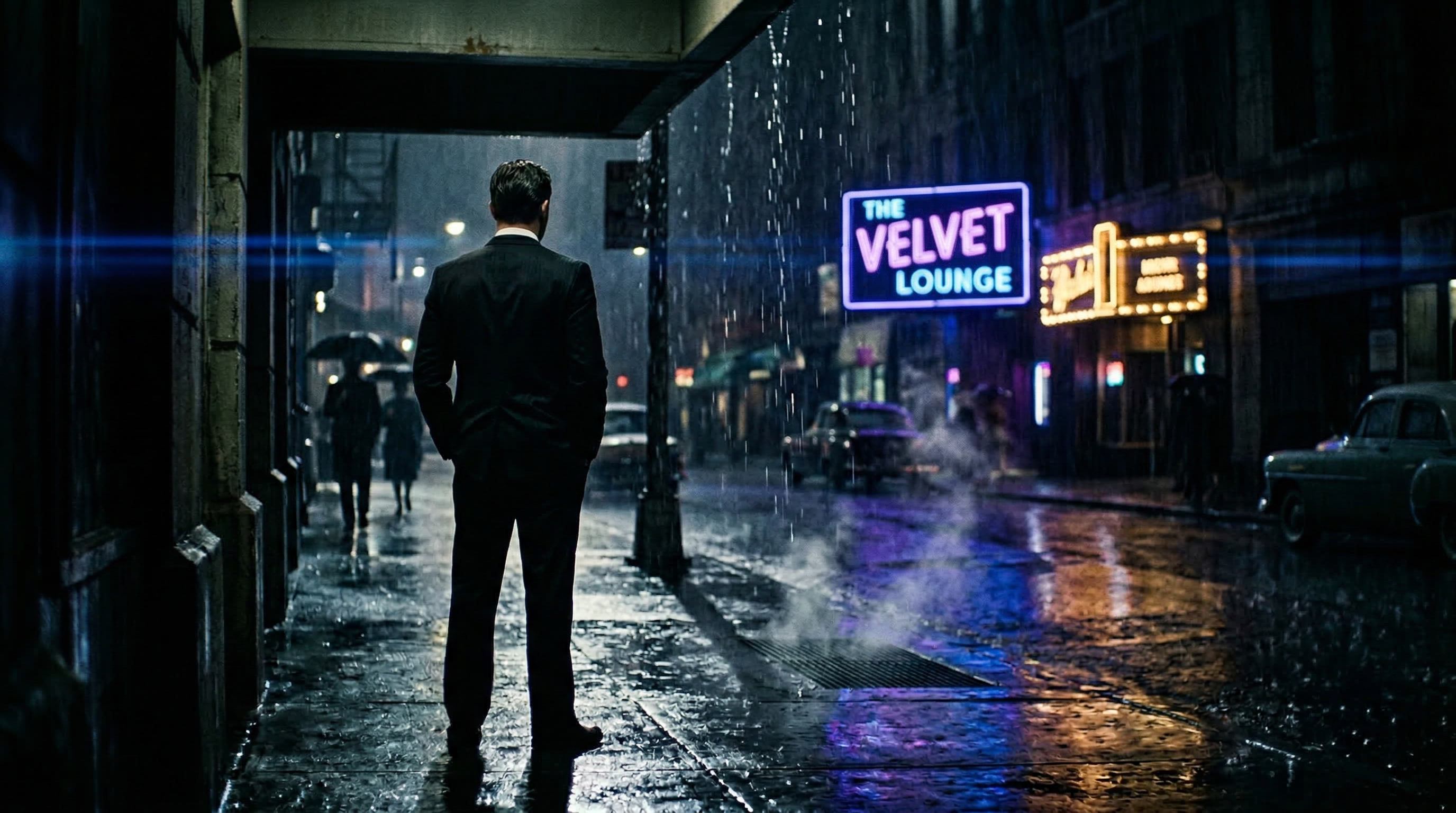
John Wick
Plot Walkthrough
John Wick opens with a flash-forward: a bloodied, grievously wounded man collapses inside a hijacked vehicle, pressing his hand to a gut wound while watching a phone video of a laughing woman on a beach. It is a deceptively quiet image — one of tenderness amid carnage — that encapsulates the film's entire emotional engine.
We then see John Wick (Keanu Reeves) in the days following the death of his wife Helen (Bridget Moynahan), who has succumbed to a terminal illness. Unable to reach John through the brutality she knows he has survived, Helen arranges for a beagle puppy named Daisy to be delivered after her death — a final, posthumous gift so that John would have something to grieve alongside, rather than grieve alone. The film hinges on this small act of profound love.
A chance encounter at a gas station puts John in the path of Iosef Tarasov (Alfie Allen), a petulant young heir to New York's Russian mob, who becomes fixated on John's prized 1969 Ford Mustang Boss 429. When John refuses to sell the car, Iosef and his men break into John's home that night. They beat John unconscious, kill Daisy, and steal the car. It is an act of such casually executed cruelty — the puppy is bludgeoned with a baseball bat while whimpering — that it immediately reframes the entire franchise's emotional logic: this is not a movie about a car or revenge in any abstract sense. It is about grief that has been weaponized.
Iosef brings the Mustang to a chop shop run by Aurelio (John Leguizamo), who immediately recognizes the car and refuses service. He then calls Viggo Tarasov (Michael Nyqvist), Iosef's father and the boss of New York's Russian Mafia, and punches Iosef in the face. In one of cinema's great economy-of-exposition moments, Viggo asks Aurelio why he struck his son. Aurelio explains. Viggo pauses, then simply says: "Oh." In that single syllable, the audience understands both the scale of what Iosef has done and the depth of John's legend.
"It's not what you did, son, that angers me so. It's who you did it to… He was the one you sent to kill the fucking Boogeyman."
— Viggo Tarasov to IosefViggo's subsequent monologue to Iosef about John is the film's most celebrated sequence. He reveals that John was once the most lethal operative in his organization — nicknamed the "Baba Yaga" (a figure from Slavic folklore, a supernatural force of malevolence). John was so effective he killed three men in a bar with a pencil. When John fell in love with Helen and asked to leave, Viggo gave him a task so seemingly impossible no one believed it could be done. John completed it in three days. The bodies he left behind became the foundation of Viggo's empire.
John recovers a cache of weapons and gold coins from beneath his home's concrete floor, checks into the Continental Hotel — a neutral sanctuary for the criminal underworld where "conducting business" (i.e., murder) is absolutely prohibited — and begins his hunt. Winston (Ian McShane), the Continental's enigmatic proprietor, gives John a single piece of intelligence: Iosef is at a nightclub called the Red Circle. John infiltrates the Red Circle in one of the film's landmark sequences: a tactical, three-zone assault through a locker room, a bathroom, a dance floor, and a VIP area, set against pulsing EDM music, with John dispatching dozens of guards using close-quarters gun fu. It is choreographed not as a typical Hollywood action sequence but as spatial problem-solving — John always conscious of reloads, angles, and positioning.
John is wounded and forced to retreat. Viggo escalates by putting a $2 million bounty on John and secretly hiring Marcus (Willem Dafoe), a sniper and John's old friend, to kill him. While John convalesces at the Continental, a hitwoman named Ms. Perkins (Adrianne Palicki) attempts to kill him in his room — breaking Continental rules. Marcus, watching from a nearby building, fires a warning shot through the pillow next to John's head to wake him. John subdues Perkins and interrogates her, learning that Viggo has concealed an enormous blackmail and financial cache in a church basement in Little Russia.
John destroys Viggo's cache — an act of escalation that removes Viggo's political leverage and personal security. When Viggo arrives, John attacks but is captured, beaten, and left to die. Marcus again intervenes, creating a distraction that allows John to free himself. He kills Viggo's enforcer Kirill (Daniel Bernhardt), forces Viggo to reveal Iosef's location, then attacks the safehouse and executes Iosef. The film's climax follows John to New York Harbor, where he confronts Viggo. Their final fight is brutal and unglamorous: a knife-and-fist brawl in the rain. John wins, leaving Viggo to die of his wounds. He then breaks into a nearby veterinary clinic to treat himself and adopts a pit bull puppy scheduled for euthanasia. The film closes where it began — John walking home — but this time with a dog at his side.
"People keep asking if I'm back and I haven't really had an answer. But now, yeah, I'm thinkin' I'm back."
— John WickMajor Themes
Grief as the primal engine. The film's central thesis is that grief is not passive but violent. John's entire rampage is framed not as revenge for a car but as a response to the destruction of his last connection to Helen. The puppy was not merely a pet — it was a conduit between the living and the dead, a way to grieve "unalone." When it is taken, John has no reason to remain in the civilian world.
The impossible retirement. John Wick establishes that the criminal underworld does not have exits — only reprieves. John was granted his retirement only because he performed an "impossible task," and the world only tolerates his absence when there is no reason to pull him back. The film argues implicitly that men who were forged in violence are never truly free of it; freedom, for such men, is always conditional and always temporary.
Rules and civilization. The Continental's code — no business on Continental grounds, honor the markers — is treated not as mere convention but as the thin membrane separating civilization from chaos. When characters break these rules (Ms. Perkins, eventually John in Chapter 2), consequences are absolute. This creates the franchise's unusual moral architecture: a world where assassins have more rigid codes of honor than the civilian society surrounding them.
Identity and mythology. The Baba Yaga legend functions as both homage and burden. John built that reputation voluntarily; it is what he had to become to earn his freedom. But the legend also precedes him — it shapes how others react, how Viggo fears him, how Iosef cannot fathom the danger. Identity in this world is a cage as much as a weapon.
Cinematic Style
Stahelski and Leitch, both former stunt coordinators, built the action sequences around the principle of spatial transparency: the camera does not cut away from the violence or obscure the choreography. Long, uninterrupted takes allow audiences to see exactly what John is doing and how. The Red Circle sequence is the archetype. The film's color palette — deep blues and golds — became the franchise's visual signature, and cinematographer Jonathan Sela's lighting turns every surface into something luxurious and slightly sinister. Tyler Bates and Joel J. Richard's score blends industrial pulse with melancholy orchestration, while Le Castle Vania's "Shots Fired" became immediately iconic.
Characters
John Wick
Keanu Reeves
John Wick is a former assassin so lethal he earned the nickname "Baba Yaga" — the mythological Slavic bogeyman — from the Russian mob that employed him. Having completed an "impossible task" (killing an undisclosed number of targets in three days with his bare hands), John was allowed to retire and marry Helen, a civilian woman he loved deeply. His retirement lasted several years until Helen died of a terminal illness. The subsequent destruction of Daisy, the puppy Helen sent him as a posthumous gift, triggers his return. Psychologically, John is a man at war between two selves: the gentle, grieving husband who just wants to feel close to his dead wife, and the near-supernatural killing machine his past forged him into. He barely speaks, communicates through action, and is fueled entirely by a specific, devastatingly human grief.
Viggo Tarasov
Michael Nyqvist
Viggo Tarasov is the head of New York's Russian Mafia and the architect of the criminal empire whose foundations are literally built on John Wick's past atrocities. He is one of the franchise's most intellectually compelling villains: not cruel for cruelty's sake, but precisely calibrated in his assessment of threats and resources. When his son Iosef triggers John's rampage, Viggo reacts not with bravado but with dread — a dread born from intimate knowledge of what John is capable of. His monologue explaining John's legend is delivered with something approaching reverence. Viggo makes strategic decisions that are reasonable given his resources, but he knows they are ultimately futile. He and John share a grudging mutual respect — both products of the same violent world.
Winston
Ian McShane
Winston is the proprietor of New York's Continental Hotel, the franchise's moral and structural anchor. He occupies an ambiguous position: he maintains the underworld's neutral ground and enforces its code absolutely, yet he clearly has personal affection for John and bends what rules he can. Ian McShane plays him with a silky authority that conveys both genuine warmth and absolute power. In this film, Winston serves mainly as an information broker and narrative compass — directing John toward Iosef's location and having Ms. Perkins executed for breaking Continental rules. His warning — "You dip so much as a pinky back into this pond… you may well find something reaches out and drags you back into its depths" — proves prophetic across the entire franchise.
Marcus
Willem Dafoe
Marcus is an elder statesman of the assassin world: a white-haired sniper of supreme skill and rare moral code. He is one of John's few genuine friends from his old life, attending Helen's funeral and visiting John in the aftermath. When Viggo secretly contracts Marcus to kill John, Marcus accepts — but then deliberately sabotages his own assignment by firing warning shots to alert John rather than kill him. His motivation is loyalty, filtered through the franchise's honor system: he took the job to keep someone worse from taking it, never intending to follow through. When Viggo discovers Marcus's duplicity, he has Marcus tortured and executed. Marcus's death is the franchise's first example of a recurring theme: those who show John kindness are punished.
Ms. Perkins
Adrianne Palicki
Ms. Perkins is a mercenary hitwoman who accepts a doubled bounty from Viggo to kill John inside the Continental — breaking its most sacred rule. She is characterized by cold professional efficiency, genuine physical skill, and a complete absence of the honor code that governs most of the underworld's players. She is the franchise's first portrait of what happens when someone rejects the rules entirely: she gets away with it temporarily, but Winston eventually has her executed in an alley. Her fate establishes early that the Continental's rules are not aspirational but absolute. Palicki brings genuine menace to the role, making Perkins a credible threat to John rather than a setpiece villain.
John Wick: Chapter 2
Plot Walkthrough
Chapter 2 opens where the first film ended — almost. John Wick is in the process of reclaiming his Mustang from the warehouse of Abram Tarasov (Peter Stormare), Viggo's brother and the final Tarasov power still standing. The sequence is both a callback and a statement of intent: the fight is messier, the damage to the car catastrophic, and John's victory comes at a high physical cost. John spares Abram — a calculated act of clemency that invokes the franchise's honor code rather than continuing a blood feud — and leaves. He then attempts, for the second time in the franchise, to bury his past.
That night, Santino D'Antonio (Riccardo Scamarcio) appears at John's doorstep. He is the Italian Camorra crime boss who, years earlier, helped John complete the "impossible task" that earned his retirement — and he holds a "marker": a blood oath medallion, sealed in wax with John's thumbprint, that represents an absolute debt of service. Santino wants John to assassinate his sister, Gianna D'Antonio (Claudia Gerini), who is about to claim the seat their father held at the High Table — the council of twelve criminal overlords who govern the global underworld. With Gianna dead, Santino can claim her seat.
John refuses. Santino leaves, then immediately levels John's house with an RPG launcher, destroying everything John had rebuilt. He then visits Winston, who confirms the brutal calculus: the marker cannot be defied. To refuse a marker is to invite immediate execution by the entire underworld. John has no choice.
The Rome sequence that follows is the film's most formally accomplished passage. John travels to the Italian capital and infiltrates a palatial underground complex beneath the catacombs where Gianna's "coronation" ceremony is being held. He finds Gianna alone in her dressing room and, rather than kill her outright, tells her who sent him. Gianna — who clearly suspected something of this kind — chooses to die on her own terms. She slits her wrists in her bathtub. John holds her hand as she bleeds out, then puts a bullet in her head: a mercy shot that also fulfills the letter of the contract. It is the franchise's most morally complex single action — a killing that is simultaneously an assassination, an act of compassion, and a betrayal.
Gianna's bodyguard Cassian (Common), who was devoted to her, immediately pursues John. The subsequent fight — through the catacombs, into a club, then through the streets and onto a subway — is one of cinema's great sustained action sequences. Their mutual respect as professionals is palpable: when John stabs Cassian in the aorta on a subway car and leaves the blade in (pulling it out means death), he tells him precisely this and leaves Cassian with a choice and his dignity intact.
But Santino has no intention of honoring his end of the arrangement. He doubles the open contract on John, ostensibly in revenge for his sister's death, using John's deed to consolidate his own position at the High Table. With a $7 million bounty now active, John is mobbed by assassins from every corner of New York. His escape leads him to the Bowery King (Laurence Fishburne), a homeless crime lord with a network of "beggars" that doubles as an intelligence apparatus. The Bowery King gives John a Kimber M1911 with seven bullets — one for each million of the contract — and sends him toward Santino's gala at an art museum.
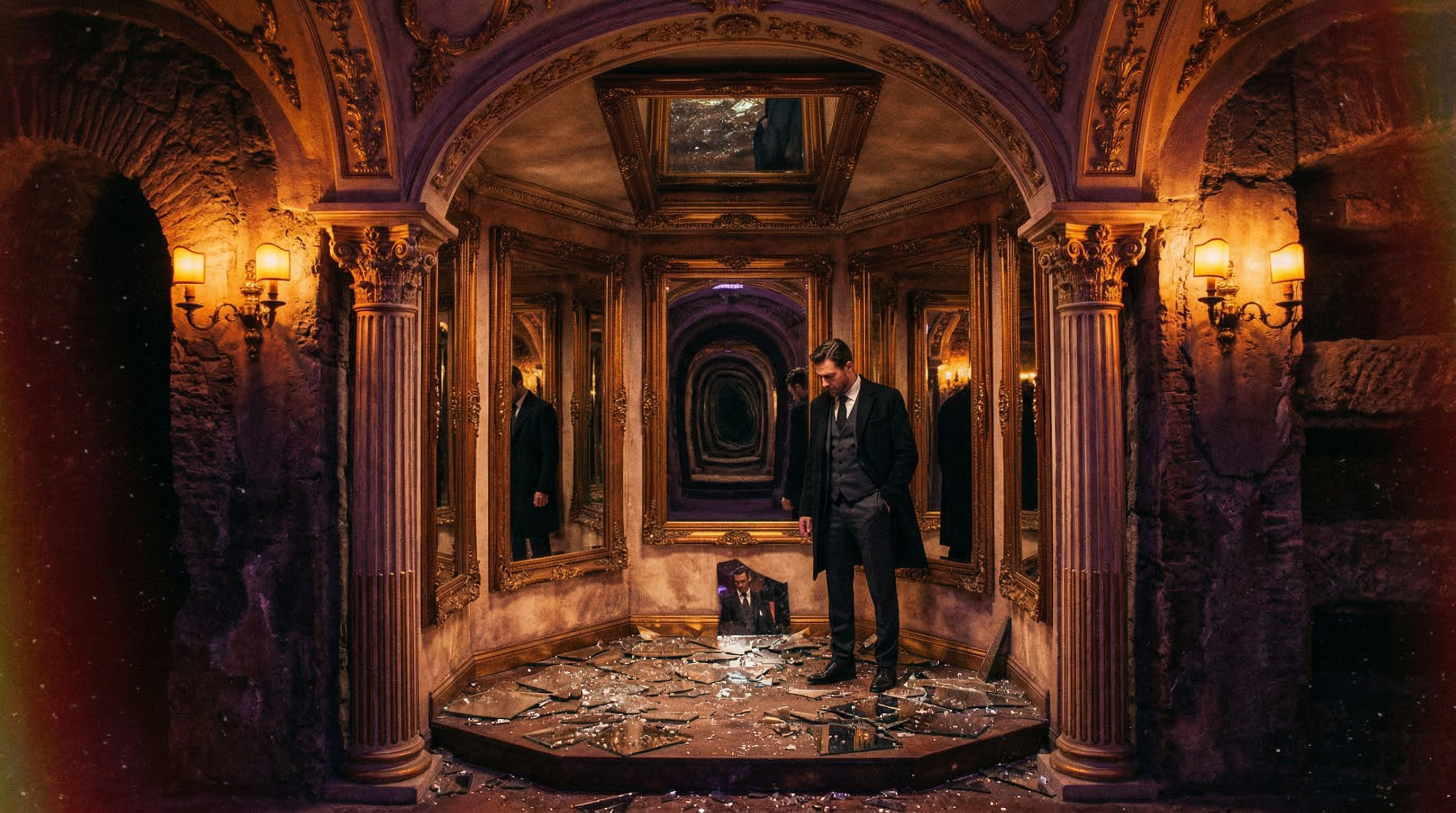
John's assault on the museum is the film's maximalist centrepiece: a gladiatorial combat through an art installation of infinite mirrors, John fighting off wave after wave of assassins while Santino watches from the top of the staircase. He kills everyone including Ares (Ruby Rose), Santino's mute bodyguard. But Santino escapes and retreats to the Continental, where Continental law provides absolute sanctuary.
This is where Chapter 2 pivots into genuinely tragic territory. Winston tells John that the marker has been fulfilled — Santino no longer has any hold on him — and warns him to walk away. John instead enters the Continental lounge and executes Santino in cold blood, violating the most fundamental law of the underworld. In the film's final scene, Winston meets John in Central Park and formally declares him "excommunicado": stripped of all Continental protections, services, and resources. But as their friendship demands, Winston gives him a one-hour head start and a marker that may prove useful in the future. As John runs, the phones of every assassin in the city begin to ring. A $14 million global bounty goes live.
"You stabbed the devil in the back and forced him back into the life that he had just left. You incinerated the priest's temple. Burned it to the ground. Now he's free of the marker, what do you think he'll do? He had a glimpse of the other side and he embraced it. But you, Signor D'Antonio, took it away from him."
— Winston to SantinoMajor Themes
The inescapability of the past. Chapter 2's most rigorous thematic statement is that the underworld's system of obligation — the marker — is not merely a plot device but a philosophical trap. John cannot refuse his past because the past is a contractual reality in this world. Every favor called in, every debt owed, circles back. The film argues that for men of John's type, the past is not behind them; it is infrastructure.
Honor versus self-determination. The marker system is morally ambiguous: it demands John do something he finds reprehensible (killing Gianna) in the name of an oath he once made to secure something he genuinely wanted (Helen, a life). The film does not moralize this. It simply presents it as the terms of the transaction John entered. His killing of Santino at the film's end is his first genuine act of self-determination in the franchise — and it costs him everything.
World-building and mythology. Chapter 2 massively expands the franchise's universe: the High Table, the Bowery King, the global network of assassins with their gold coin economy, the Continental hotels in Rome and New York, the Sommelier who recommends weapons like vintages, the Tailor who fits bulletproof suits. Each new element reinforces that this underworld is not a subculture but an entire parallel civilization.
Consequences of reputation. The Baba Yaga legend functions differently here than in the first film. Where it once inspired fear that protected John, now it marks him as a target worth $14 million. Fame in the underworld is not an asset in perpetuity — it is a debt accumulating interest.
Cinematic Style
Chapter 2 significantly escalates the visual ambition. Cinematographer Dan Laustsen's palette adds reds, purples, and golds to the franchise's established blues — the Rome sequences feel warmer and more Baroque, reflecting Italy's Camorra roots. The mirror room sequence inverts all of the franchise's spatial logic: instead of transparent, intelligible combat, John fights reflections of himself and others, creating a sequence that is simultaneously disorienting and thematically resonant (John confronting multiple versions of himself). The pencil-kill scene — John murders two assassins in a bathroom with a pair of pencils — echoes Viggo's famous anecdote from the first film and confirms the franchise's aesthetic commitment to making the impossible seem technically plausible.
"Tell them all… whoever comes, whoever it is… I'll kill them. I'll kill them all."
— John Wick to WinstonCharacters
John Wick
Keanu Reeves
In Chapter 2, John is a man in active conflict with his own nature. He desperately wants to be retired — to grieve, to live quietly — but the world refuses to let him. Compelled by the marker system, he commits the most morally compromised act of the franchise's early chapters: killing Gianna D'Antonio not out of revenge or self-defense but because a blood oath legally demands it. His act of mercy (holding Gianna's hand as she dies, then fulfilling the contract) is deeply human but professionally brutal. His killing of Santino at the Continental is a turning point: the first time in the series John consciously breaks the rules he has lived by. It signals a fundamental shift in his relationship to the underworld's codes — from adherent to rebel.
Santino D'Antonio
Riccardo Scamarcio
Santino is the franchise's most purely villainous antagonist: calculating, entitled, and entirely self-serving. He helped John earn his retirement not out of kindness but as a long-term investment — he always intended to call in the marker. He is the embodiment of the underworld's aristocratic corruption: a man born to wealth and power who has never developed the discipline or skill to earn it. His betrayal of John after the Gianna assassination is perfectly choreographed cowardice. His retreat to the Continental and his casual assumption that its rules will protect him indefinitely is his fatal miscalculation. John executes him not in a rage but with cold finality.
Cassian
Common
Cassian is one of the franchise's most compelling secondary characters: a highly skilled assassin who was genuinely devoted to Gianna D'Antonio. His pursuit of John is framed as entirely legitimate — he did not know about the marker, has no reason to believe it, and from his perspective Gianna was simply murdered. Common brings physical credibility and an unusual emotional legibility to the role: Cassian's grief over Gianna feels real, making his relentless pursuit of John feel honorable rather than antagonistic. Their final exchange — John leaving the knife in Cassian's aorta and explaining how to survive — is the franchise's most elegant example of professional respect as an ethical code.
The Bowery King
Laurence Fishburne
The Bowery King is introduced in Chapter 2 as the franchise's most eccentric power player: an intelligence broker who disguises his network as homeless beggars, rules a subterranean empire beneath New York, and dresses with theatrical flair. Fishburne brings a charismatic volatility to the role — the Bowery King is simultaneously funny and genuinely menacing, the kind of man who enjoys the power of deciding whether someone lives or dies. His decision to give John seven bullets is framed as a sporting bet, an act of admiration for someone who is attempting to kill a member of the High Table.
Winston
Ian McShane
Winston's role expands significantly in Chapter 2. He is no longer merely an information broker but a fully realized power figure in the underworld's political architecture. His relationships exist on multiple levels: genuine personal affection for John, absolute professional loyalty to the Continental's code, and a long-term strategic intelligence that sees every move several steps ahead. His monologue to Santino — warning him what he has done by invoking the marker against John — is the film's most celebrated non-action sequence. It clarifies Winston's deep ambivalence: he cannot protect John from the system, but he can telegraph exactly how dangerous John is.

John Wick: Chapter 3 – Parabellum
Plot Walkthrough
The subtitle Parabellum is Latin for "prepare for war," drawn from the ancient dictum Si vis pacem, para bellum — "If you want peace, prepare for war." It is the franchise's most philosophically loaded subtitle and sets the tone for a film that is, more than any of its predecessors, about the infrastructure of the underworld's power rather than John's personal vendetta.
Chapter 3 opens precisely where Chapter 2 ended: John has approximately one hour before his excommunicado status goes live. The film's first act is a sustained, exhilarating chase sequence through New York's streets as John races to secure resources before the clock expires. He visits the New York Public Library and retrieves a marker medallion and a rosary — items hidden inside an old book. He finds the Continental's doctor to treat a stab wound, forcing the man to complete the suturing before the deadline.
The first major fight sequence — John versus a warehouse full of assassins — takes place in a kitchen knife and axe warehouse, and is among the franchise's most viscerally creative action passages. John hurls kitchen knives and axes, impales people against surfaces, and uses the warehouse's inventory as a lethal arsenal. From there, John steals a horse at a stable and rides through New York to the Ruska Roma — a crime syndicate that operates under the cover of performance dancers and to which John once belonged. The Director (Anjelica Huston), the syndicate's enigmatic leader, is presented as a mother figure to John from his youth. He presents his rosary and demands safe passage to Casablanca. She grants it reluctantly, knowing the punishment she will receive from the High Table.
In Casablanca, John reunites with Sofia Al-Azwar (Halle Berry), an old friend who now manages the Continental there. John holds a marker over Sofia — he once rescued her daughter and placed her in hiding. The Casablanca sequence introduces Sofia's two trained Belgian Malinois into the action repertoire, and the resulting fight — woman and dogs operating as a coordinated tactical unit — is one of the franchise's most inventive setpieces.
John walks into the Moroccan desert alone until he collapses. He is found by the Elder (Said Taghmaoui), the one authority above the High Table. The Elder strikes a deal: the excommunicado will be lifted if John pledges absolute fealty to the High Table for the remainder of his life — and kills Winston as proof. To seal the oath, John severs his own left ring finger and gives his wedding ring to the Elder. This act is devastating in context: the ring is John's last physical connection to Helen, and surrendering it represents the ultimate sacrifice of his personal identity to the institutional world that has always owned him.
Back in New York, the High Table's Adjudicator (Asia Kate Dillon) has been punishing everyone who aided John. Winston is given seven days to resign as Continental manager. The Bowery King is slashed seven times by Zero (Mark Dacascos), a Japanese assassin who is both genuinely lethal and a deeply committed fan of John Wick's work.
John returns to the Continental. But when the Adjudicator demands he kill Winston and Winston refuses to step down, John cannot bring himself to follow the Elder's order. The Adjudicator "deconsecrates" the Continental — removes its neutral status — and sends an army of armored High Table enforcers to kill both John and Winston. What follows is the film's grandest sequence: John and Charon defending the Continental against an onslaught of heavily armored soldiers. The sequence ends with John killing Zero in a corridor duel.
On the rooftop, the Adjudicator and Winston negotiate. Winston offers to swear fealty to the High Table — effectively betraying John. He shoots John multiple times, sending him off the roof onto a dumpster far below. The Adjudicator accepts the deal and reconsecrates the Continental. But when she checks the alley for John's body, it is gone. The badly wounded Bowery King receives John's broken body in his underground bunker. Both men agree: the High Table must be destroyed.
"Si vis pacem, para bellum."
— Winston to John — "If you want peace, prepare for war."Major Themes
Freedom versus servitude. The film's structural argument is that the underworld's hierarchy does not offer freedom — only different forms of bondage. John's deal with the Elder is the ultimate illustration: even excommunicado status, which feels like punishment, is at least a form of autonomy. Pledging fealty restores his legal standing but surrenders everything that makes life worth living.
The system as tyrant. The High Table and the Adjudicator represent institutional authority at its most absolute and dehumanizing. The Adjudicator punishes Winston and the Bowery King not because they acted badly but because they failed to perfectly enforce the rules against someone they cared for. The film frames the High Table not as a collection of wicked individuals but as a bureaucracy of violence.
Loyalty versus survival. The film is populated with characters who must choose between loyalty to John and loyalty to the systems that keep them alive. The Director is stabbed through both hands. Sofia fights because she must, then abandons John when the debt is paid. Winston shoots John. None of these are purely villainous acts — they are calculated sacrifices within a world where loyalty has a price.
Grief and identity. Severing his ring finger and surrendering his wedding ring is the film's emotional climax, overshadowing any action sequence. John's entire journey across three films has been animated by his love for Helen. When he gives that ring to the Elder — not as a romantic gesture but as collateral — he is trading the last physical artifact of that love for the mere right to continue existing.
Cinematic Style
Chapter 3 is the franchise's most internationally ambitious film. The New York library and warehouse sequences are defined by Dan Laustsen's characteristically crisp blues and shadow. The Casablanca sequences shift to warm golds, terracotta, and the blue of tiled walls. The desert sequence is bleached and minimal. The Continental's final battle deploys smashed glass, architectural geometry, and low-angle shots that make John and Charon appear as figures in a classical frieze. Mark Dacascos's Zero brings intentional theatricality — his admiration for John borders on worship, and their final duel in the Continental's art deco corridors plays as something between a battle and a ceremony.
"Hey, John. …It's been a real honor."
— Zero (final words)Characters
John Wick
Keanu Reeves
Chapter 3's John is the most psychologically exposed version of the character across the first three films. Stripped of every resource and running on fumes, he is forced to rely on relationships he spent years severing — the Ruska Roma, Sofia, the Elder — revealing the depth of his old life's reach. His severing of his ring finger is the defining act of the film: a man trading his last connection to the person he loved most for the right to keep surviving. John's refusal to kill Winston is equally significant: it is the first time in the franchise John prioritizes loyalty to a friend over self-preservation and the system's demands.
Winston
Ian McShane
Winston's arc in Chapter 3 is the most morally complex of any character in the film. He faces an ultimatum — step down or be destroyed — and chooses a third option that the Adjudicator does not anticipate: negotiate from a position of renewed loyalty while appearing to sacrifice John. Whether Winston genuinely betrays John by shooting him is debated in the franchise's fandom. His shooting of John from the rooftop is almost certainly calculated: he shoots John in a way that satisfies the Adjudicator but leaves John survivable. Winston has always been the franchise's chess player, and this act may be its most sophisticated long-game move.
Sofia Al-Azwar
Halle Berry
Sofia is introduced as a woman of John's generation and professional standing — a former assassin who accepted Continental management as a form of retirement. Her dynamic with John is unusual in the franchise: they have history, they have mutual markers, and there is no romantic tension — just professional respect and grudging affection. Berry trained for months to perform the Belgian Malinois-assisted fight sequences convincingly, and the Casablanca scenes are among the franchise's most technically impressive. Sofia's character illustrates a crucial franchise theme: even those who manage to carve out stable positions in the underworld are subject to being dragged back in.
The Adjudicator
Asia Kate Dillon
The Adjudicator is the franchise's most effective portrait of institutional bureaucratic evil. She is not personally cruel — she is precisely calibrated to the rules. When she punishes the Director, Winston, and the Bowery King, she is not sadistic; she is procedural. Asia Kate Dillon plays the character with a flat, inhuman authority that is more unsettling than any conventional villain: the Adjudicator never raises her voice, never threatens, never gloats. She simply applies consequences. This makes her the franchise's most precise articulation of what the High Table represents: not personalities but a system.
Zero
Mark Dacascos
Zero is one of the franchise's most entertaining antagonists precisely because of the incongruity between his lethal skill and his starstruck admiration for John. He is a Japanese assassin of exceptional ability — the High Table's most trusted enforcer in this film — but he is also, genuinely, a fan. He dispatches countless opponents with cheerful efficiency but becomes nervous and almost reverential when dealing directly with John. The scene in which he and John exchange pleasantries while technically not killing each other is both funny and strangely touching. Zero dies on John's sword and says it was an honor.

John Wick: Chapter 4
Plot Walkthrough
Chapter 4 is the franchise's most epic installment in every dimension: runtime, scale, body count, geography, and emotional weight. It is also the only film in the series whose ending is genuinely final — for John, at least.
The film opens with John recovering in a Bedouin camp following his fall from the Continental's roof. Restored to fighting condition, he travels to Morocco and executes the Elder — the man who gave him his impossible deal in Chapter 3 — with grim efficiency. It is a statement: John is no longer playing by the High Table's rules. He is dismantling the structure.
The High Table responds by dispatching the Marquis Vincent Bisset de Gramont (Bill Skarsgård), a member of the Table given unlimited resources and authority to end the John Wick problem permanently. Skarsgård plays the Marquis as a study in aristocratic contempt. His first acts are to strip Winston of his position, declare Winston excommunicado, destroy the New York Continental with explosives, and execute Charon (Lance Reddick) in cold blood — a devastating moment given both the character's place in the franchise and the real-world knowledge that Reddick died during production. The Marquis then forces John's old friend Caine (Donnie Yen), a blind retired High Table assassin, out of retirement by threatening his daughter.
In Osaka, John takes refuge with Shimazu Koji (Hiroyuki Sanada), his friend and the city's Continental manager. The High Table deconsecrates the Osaka Continental and sends Caine and Chidi (Marko Zaror) to hunt John. Koji fights Caine so that John can escape — a sacrifice that Caine has to see through, reluctantly killing Koji in one of the franchise's most genuinely mournful action sequences. A mysterious Tracker (Shamier Anderson) named Mr. Nobody pursues John throughout but refuses to capture him until the bounty is worth his while.
In Berlin, John seeks readmission to the Ruska Roma crime family. His adoptive sister Katia (Natalia Tena) requires that he kill Killa Harkan (Scott Adkins, in a fat suit), a High Table member who murdered her father. The Berlin nightclub sequence that follows, scored to pounding techno and shot with an overhead drone camera that watches John fight through crowds like a bird tracking prey, is perhaps the franchise's single most technically astonishing setpiece.
Winston, now excommunicado himself, meets John at Charon's graveside and proposes an ancient High Table tradition: a duel. If John can challenge the Marquis to a sanctioned pistol duel and win, he earns his freedom from the High Table permanently. The terms are set by the Harbinger (Clancy Brown): dueling pistols at sunrise at Sacré-Cœur in Paris.
Paris becomes both a battlefield and a philosophical arena. The Marquis sets a $25 million bounty on John to prevent him from reaching Sacré-Cœur. The extended Parisian sequence — which crosses the Rue Foyatier (the long staircase below Sacré-Cœur), the Arc de Triomphe roundabout, and multiple streets — runs for nearly an hour of screen time. The staircase sequence, in which John is repeatedly thrown down 222 steps and keeps climbing back, has the texture of mythological labor — Sisyphus in a bulletproof suit. The Arc de Triomphe car-fight, shot from above at night, is pure cinema.
John and Caine arrive at Sacré-Cœur precisely at sunrise. The duel is a classical pistol standoff: three rounds, fired in sequence. John is hit in both the first and second rounds. Caine's third shot wounds John severely. Believing John is finished, the Marquis interrupts, taking the pistol from Caine to personally deliver the killing shot — a fatal arrogance Winston has been waiting for. John fired low on both of his shots, saving his third bullet for this precise moment. He kills the Marquis with a headshot.
The Harbinger declares John and Caine free of the High Table. John, bleeding from multiple gunshot wounds, lies back on the steps of Sacré-Cœur and watches the Paris sunrise, whispering the word "Helen." The film's final sequence shows Winston and the Bowery King standing at a gravestone: "John Wick — Loving Husband."
"Those who cling to death — live. Those who cling to life — die."
— John Wick and Caine (to each other, before the final duel)Major Themes
Freedom at the cost of everything. Chapter 4's central arc is John finally achieving what he has sought across all four films: freedom from the High Table. The film's philosophical gambit is to argue that this freedom, when it arrives, costs so much that the man who wanted it no longer exists in the same form. John wins — but dies winning, suggesting that the life he fought to reclaim had already been consumed by the fighting.
Legacy and consequence. The deaths of Charon, Koji, and ultimately John himself constitute a meditation on the price of association: those who stand close to John Wick, however loyally, are destroyed. The film does not frame this as John's failure but as the nature of his world.
The duel as ritual and metaphor. The climactic duel is the most formalized action sequence in the franchise — two men with pistols, in sunrise light, on sacred ground. It inverts the franchise's usual kinetic logic and reduces everything to a single shot. The franchise that began with John killing dozens for a puppy ends with one bullet deciding everything.
Friendship in a world designed to betray it. Caine and John's relationship is the film's emotional spine. Forced to fight each other, they nonetheless help each other on the Parisian stairs, cooperate at key moments, and ultimately the duel between them is less about killing than about witnessing.
Cinematic Style
Chapter 4 is the franchise's visual apogee. Dan Laustsen's cinematography employs several formally radical choices: the overhead Berlin nightclub sequence, the arc-lit Paris streets, the wide-angle Sacré-Cœur exteriors. The color grading shifts between locations — Osaka's cool greens, Berlin's neon magentas, Paris's golden dawn — with each city feeling like a different moral register. The film's runtime (169 minutes) was deliberately epic; Stahelski edited it down from a 225-minute cut.
"How you do anything is how you do everything."
— The Marquis (opening line)Characters
John Wick
Keanu Reeves
In Chapter 4, John is finally fighting not for revenge but for something larger: freedom. After three films of being drawn back into a world he repeatedly tried to leave, John makes a conscious choice to destroy the system rather than escape it. His physical performances in this film are extraordinary given Reeves's age (58 at release) — the staircase sequence in particular requires repeatedly absorbing brutal impacts and rising again. John's death on the steps of Sacré-Cœur is treated with quiet dignity: he dies watching the sunrise, whispering his wife's name. After four films of violence, grief, and endurance, what remains at the end is not triumph but peace. His epitaph — "Loving Husband" — is what he asked for and what he was.
Caine
Donnie Yen
Caine is the franchise's most fully realized supporting character: a blind retired assassin of extraordinary skill who is forced back into killing to protect the daughter he loves. Donnie Yen plays Caine as a man for whom fighting has become as natural as breathing — and as morally neutral. He fights John not with hatred but with sorrow; he helps John at multiple points even while trying to complete the Marquis's orders. His final confrontation with John on Sacré-Cœur's steps is the franchise's most tender action sequence. After John dies, Caine is shown returning to his daughter in Paris — only for Akira to appear, seeking revenge for her father Koji's death.
The Marquis
Bill Skarsgård
The Marquis is the franchise's most explicitly aristocratic villain: a man who sees himself as a steward of civilization, whose cruelty is a function of certainty rather than passion. Skarsgård brings a predatory elegance to the role — the Marquis never raises his voice, always dresses impeccably, and treats every encounter as a social performance. His destruction of the Continental and execution of Charon are designed not just to punish but to humiliate. His fatal flaw is arrogance: he cannot resist the theatrical gesture of taking the final shot at John himself, leaving Caine's proxy role violated. The Marquis dies with the same theatrical contempt he lived by.
Winston
Ian McShane
Chapter 4 completes Winston's arc from observer to active participant. Having been destroyed along with the Continental, Winston is as personally invested in the Marquis's destruction as John. His proposal of the duel gambit is the franchise's most elegant strategic play: finding an ancient rule within the High Table's own code that the Marquis, in his arrogance, does not take seriously. Winston's "second" role at the duel means he is gambling his life on John's ability to survive three shots and save one bullet. His eulogy at John's gravestone — "Farewell, my son" spoken in Russian — is the franchise's most emotionally direct moment.
Mr. Nobody / The Tracker
Shamier Anderson
Mr. Nobody is Chapter 4's most entertaining new addition: a mercenary bounty hunter who pursues John purely for financial reasons but gradually becomes an accidental ally through pragmatic calculation and grudging respect. He has a Belgian Malinois companion, which immediately puts him in John's orbit of sympathy. His negotiation tactics — refusing to deliver John to the Marquis until the bounty reaches his number — are both funny and a comment on the High Table's financial leverage. His decision to stop pursuing John entirely after John saves his dog is a perfect franchise moment: protecting a dog is always the highest moral indicator.
Ballerina
Plot Walkthrough
Ballerina is the John Wick franchise's first spin-off feature, introducing a female protagonist while deliberately weaving her story into the established mythology's timeline. It is set in the period between Chapter 3 (2019) and Chapter 4 (2023), meaning that John Wick — still excommunicado, still hunted — appears as a supporting character at a precise narrative moment.
The film opens in the past. Eve Macarro's father, Javier (David Castañeda), is a member of the Ruska Roma who was once married into a mysterious Cult of assassins. When he takes Eve and flees the Cult, the Chancellor (Gabriel Byrne), the Cult's leader, raids Javier's home. Javier dies helping Eve escape.
Winston (Ian McShane) brings the young Eve to the Ruska Roma and introduces her to the Director (Anjelica Huston). Over the next 12 years, Eve trains as both a ballerina and a Kikimora — the Ruska Roma's operative designation. Eve earns her title by killing a former Ruska Roma member as her final test. But two months into her active service, she kills a Cultist who bears the same wrist mark as those who murdered her father. She asks the Director about the Cult. The Director refuses: a longstanding truce exists between the Ruska Roma and the Cult.
She disobeys. Visiting the New York Continental, she meets Winston, who points Eve toward a Cultist named Daniel Pine (Norman Reedus) staying at the Prague Continental. Eve travels to Prague, infiltrates Pine's room, and discovers that Pine is the Chancellor's estranged son hiding his daughter Ella from the Cult. Pine promises intelligence on the Chancellor in exchange for protecting Ella. But Cultists descend: Pine is shot, and Lena — now revealed to be an adult Cult assassin — kidnaps Ella.
Eve pursues. An arms dealer named Frank helps her locate the Cult's base in Hallstatt, Austria. The entire town is inhabited by Cultists. Eve is captured. The Chancellor reveals that the Cult is a refuge for former assassins — people who chose to exit the High Table's world. Then Lena appears and reveals she is Eve's older sister. The Chancellor orders both women killed. In the chaos, Lena is killed but Eve escapes.
The Chancellor calls the Director and threatens war. The Director calls John Wick. John arrives in full suit — ring finger gone, confirming the timeline — and rapidly defeats Eve. Instead of killing her, he tells her to leave. Eve refuses. In a moment that directly mirrors his own history, John gives her until midnight to kill the Chancellor — and then operates as her sniper support from the mountainside.
Eve's final confrontation with the Chancellor is the film's thematic crucible. He attempts to reason with her: "The village will remain. The children will be raised. And the system will continue as it has for the last thousand years." Eve's response is to step on his monologue and kill him. She rescues Ella and returns her to a recovering Pine.
John reports the Chancellor's death to the Director, who accepts it. Eve, having left the Ruska Roma by going rogue, seeks asylum at the New York Continental. At a ballet performance, Eve's phone buzzes: a $5 million bounty has been placed on her head. She walks out of the theater into an uncertain world.
"Those men from your past — don't let them steal your future."
— The Director to young EveMajor Themes
Heritage and choice. The film's central question is whether people are destined by their origins or whether they can choose their own path. Eve was born into a web of competing claims — the Cult, the Ruska Roma, and the Director's training. The Chancellor argues that her fate was always to be a killer; Eve kills him to disprove it, but the act also confirms his thesis in a different register. The film refuses to resolve this tension cleanly.
Parallel structures of exploitation. The Chancellor's most pointed accusation — that the Ruska Roma and the Cult are morally equivalent, both taking children and weaponizing grief — is the film's most analytically interesting moment. The Director has always been presented as a mentor figure, but Ballerina interrogates that framing by showing that what she provides is training toward violence, not genuine care.
The mentor as mirror. John's role in the film is deliberately limited but structurally crucial. He is the franchise's emblem of what Eve might become. His decision to give Eve until midnight rather than kill her is an act of recognition: he sees his own history in her.
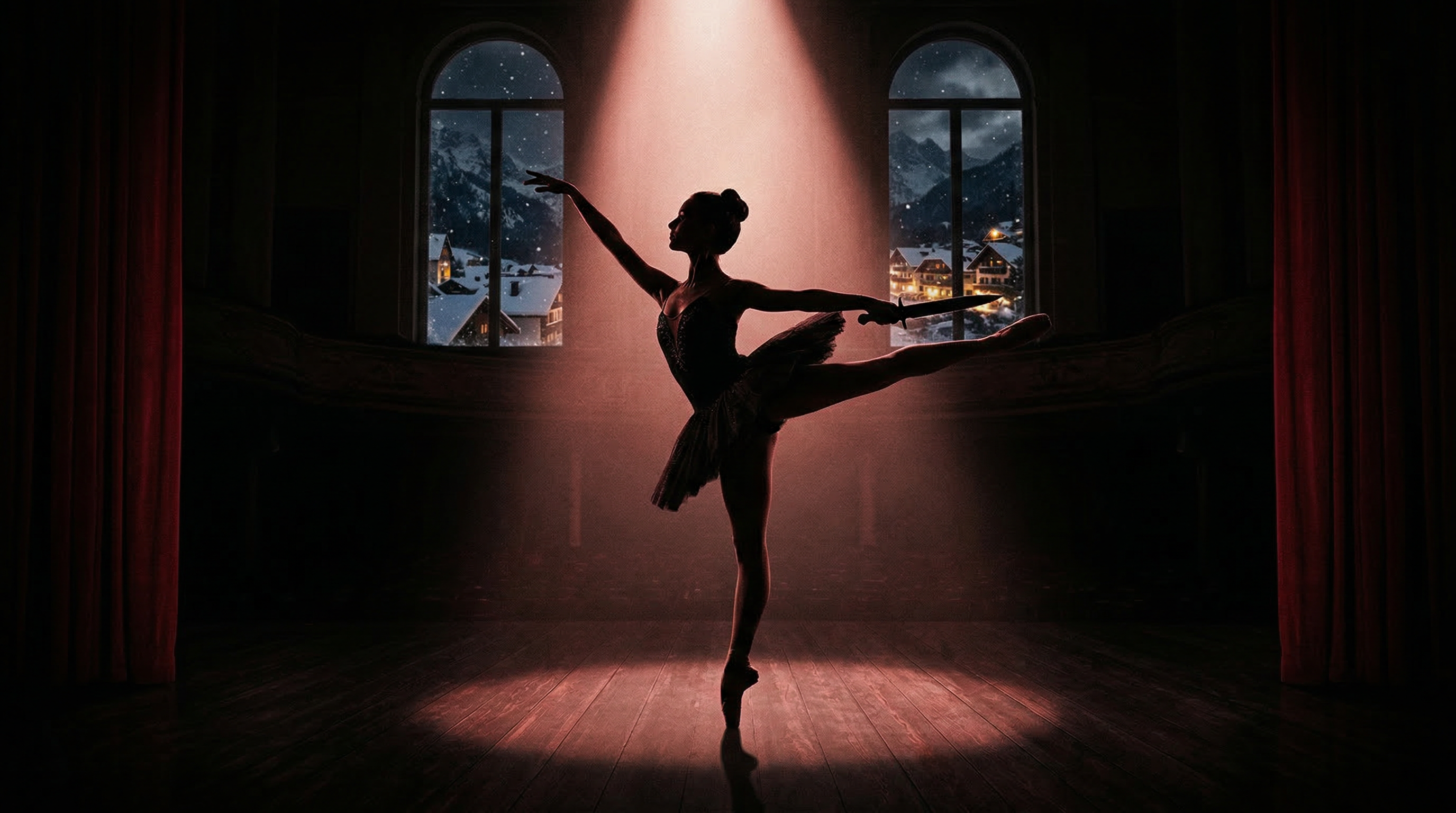
The female body as weapon and art. The ballet-assassin fusion is the franchise's most literal expression of a theme that was always present: violence as choreography, combat as performance. Several action sequences are choreographed to feel like dance — fluid, precise, rhythmically scored.
Cinematic Style
Director Len Wiseman brings a slightly different visual grammar than Stahelski — softer edges, more stylized color grading in the European sequences, and a greater emphasis on female physicality in the choreography. Ana de Armas trained extensively for the role, and the fight sequences incorporate her ballet background — she moves differently from John, using momentum and redirection where he uses mass and force. The Prague sequences have a cold, stone-and-glass palette; Hallstatt is all snow and mountain dark. The film's action highlight is a restaurant brawl involving an improbably violent chef — the franchise's most darkly comic sequence.
"The village will remain. The children will be raised. And the system will continue as it has for the last thousand years."
— The Chancellor (final words, before Eve kills him)Characters
Eve Macarro
Ana de Armas
Eve is a consciously designed parallel to John Wick: both orphaned by violence, both trained by the Ruska Roma, both driven by grief for a parent figure, both ultimately choosing revenge over institutional loyalty. But Eve is a younger, less settled version of that archetype — she has not yet achieved John's legendary status, and her mistakes are more visible. Ana de Armas brings physical commitment and genuine emotional vulnerability to the role; the scene in which she learns Lena is her sister is played with real devastation. Eve's decision to pursue the Chancellor against direct orders is simultaneously the film's inciting action and its moral statement: some things matter more than survival.
The Chancellor
Gabriel Byrne
The Chancellor is the film's most layered villain. Unlike the Marquis or Santino, he is not purely self-serving — his Cult is presented as a genuine attempt to build an alternative to the High Table's hierarchy. His cruelty is the cruelty of a true believer who cannot distinguish between caring for his community and controlling it. Byrne plays him with a quiet, almost ecclesiastical authority — he speaks slowly, in measured cadences, as if each word is a brick in an argument. His comparison of the Ruska Roma to his Cult is the film's most intellectually challenging dialogue, and the fact that Eve kills him mid-monologue rather than engaging suggests the film knows it cannot refute his argument, only reject it.
Winston
Ian McShane
Winston in Ballerina occupies his now-standard role as information broker, protector, and world-weary moral anchor. His introduction of young Eve to the Director sets the franchise's new protagonist in motion, and his later counsel about the Cult — directing Eve toward Daniel Pine — is, as always, calculated to achieve multiple ends simultaneously. His warning to Eve at the film's close mirrors his franchise-wide function: he tells people exactly what is coming, knowing they probably cannot stop it. Ian McShane again brings his trademark combination of warmth and menace, making Winston the franchise's most consistent source of moral intelligence.
The Director
Anjelica Huston
The Director's role in Ballerina is more ambiguous and interesting than her Chapter 3 appearance. She trained Eve, invested twelve years in her development, and genuinely regards her as a kind of daughter — yet when Eve goes rogue, the Director's institutional logic overrides personal loyalty immediately. She calls John Wick to eliminate Eve without apparent hesitation. Huston plays this without villainizing the Director — she is not cruel, just principled in a way that places the organization above individuals. The Director is the franchise's finest portrait of institutional care gone cold.
Charon
Lance Reddick
Lance Reddick appears in Ballerina as Charon, the New York Continental's concierge, in what became his final on-screen performance before his death in March 2023. His role is comparatively small but emotionally charged given the context: Charon serves as a figure of stability, warmth, and continuity in the franchise — a man whose professional precision never precluded genuine affection for those he served. The Continental scenes involving Charon carry additional weight for audiences who know this is the last time they will see Reddick in the role. His presence is a gift from a production that chose to honor him.
Franchise Themes
The Mythology of the Underworld
Across all five films, the franchise constructs one of contemporary action cinema's most coherent world-mythologies. The gold coin economy, the Continental hotels, the High Table, the markers, the Ruska Roma, and the Bowery King are not merely genre furniture — they constitute a complete alternative civilization with its own laws, aristocracy, economy, and moral philosophy. The franchise's most consistent argument is that this civilization is more rigorously governed than the civilian world surrounding it: its rules are absolute and their consequences immediate. The films treat this both admiringly (the codes produce a kind of honor) and critically (the codes are ultimately tools of control).
John Wick's Arc Across All Five Films
| Film | John's Status | Emotional Engine | Ending State |
|---|---|---|---|
| Chapter 1 | Retired, grieving | Loss of Helen's gift (puppy) | Avenged, briefly free, new dog |
| Chapter 2 | Attempting retirement | Forced servitude via marker | Excommunicado, running |
| Chapter 3 | Excommunicado, hunted | Surviving, reaching the Elder | Shot by Winston, delivered to Bowery King |
| Chapter 4 | Underground, rebuilding | Destroying the High Table | Wins freedom, dies |
| Ballerina | Supporting role | Sees himself in Eve; acts with compassion | Leaves after assassination; timeline leads to Chapter 4 |
The Role of Grief
Every film in the franchise — including Ballerina — is animated by grief for a parent, partner, or mentor. John's grief for Helen is the franchise's original engine, but it spawns parallel structures: Caine's devotion to his daughter, Eve's grief for her father Javier, Koji's willingness to die for his daughter Akira. The franchise consistently argues that grief is not a weakness to be overcome but a form of moral clarity — a commitment to what mattered that cannot be negotiated away.
The Action Choreography Evolution
| Film | Defining Innovation |
|---|---|
| Chapter 1 | "Gun fu" — tactical shooting integrated with judo |
| Chapter 2 | Mirror room, pencil kills, Rome catacombs pursuit |
| Chapter 3 | Dog-assisted combat, horse-mounted combat, armored assault |
| Chapter 4 | Overhead Berlin drone shot, Arc de Triomphe car-fight, staircase sequence |
| Ballerina | Ballet-integrated combat, female physicality, flamethrower duels |