The Franchise
The Merc with a Mouth
The Deadpool trilogy is the rare superhero franchise that treats genre deconstruction not as a gimmick but as its governing philosophy — a sustained argument, delivered at maximum volume, that the best way to honour pulp mythology is to weaponise its absurdities against itself.
Across three films and three distinct directorial sensibilities, Wade Wilson evolves from revenge-driven antihero to reluctant patriarch to multiverse-hopping legacy act — each escalation exposing new emotional architecture beneath the profanity and dismemberment. What began as a grassroots experiment in R-rated superhero cinema became the highest-grossing R-rated film franchise in history.
Box Office Comparison
| Film | Year | Director | Budget | Domestic | Worldwide | ROI |
|---|---|---|---|---|---|---|
| Deadpool | 2016 | Tim Miller | $58M | $363M | $782.6M | 13.5× |
| Deadpool 2 | 2018 | David Leitch | $110M | $318M | $734.5M | 6.7× |
| Deadpool & Wolverine | 2024 | Shawn Levy | $200M | $438M | $1.34B | 6.7× |
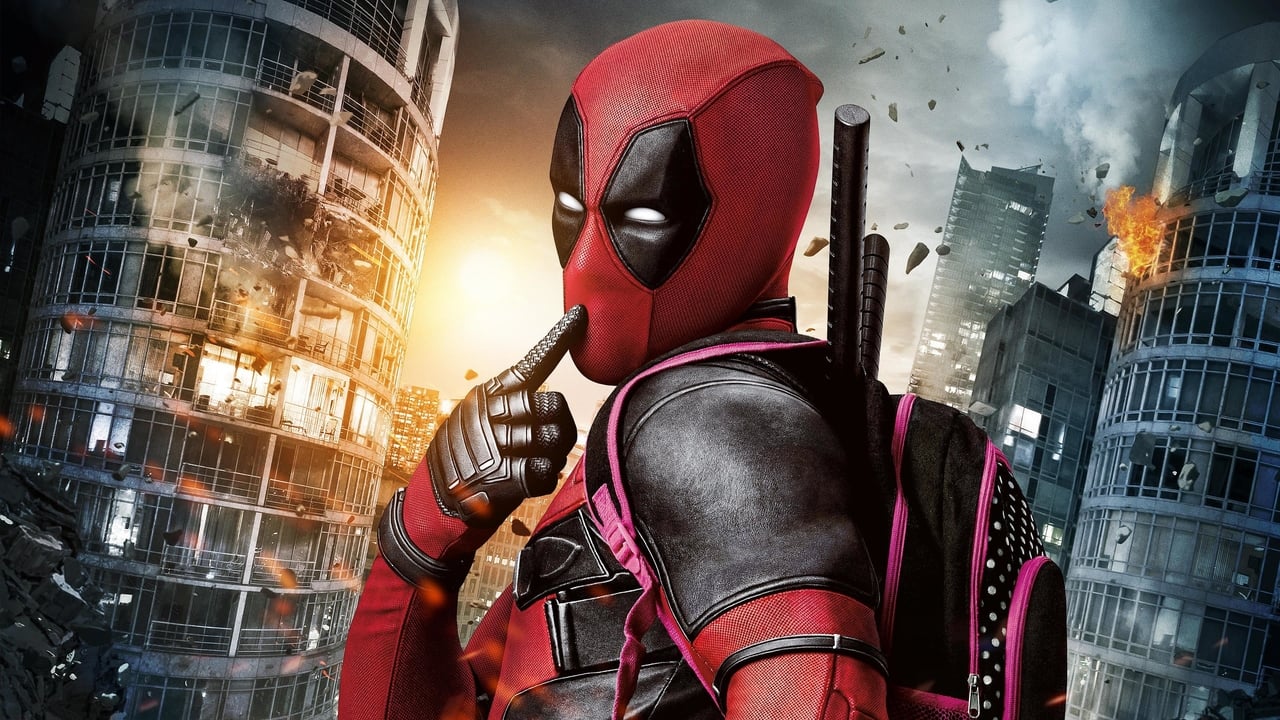
Deadpool
Plot & Narrative Analysis
Fractured Chronology as Confession
Deadpool dismantles the superhero genre’s mythic scaffolding by replacing its predictable, linear origin templates with a deliberately fractured narrative structure that treats chronology not as a storytelling necessity but as a convention to be interrogated. The film’s relentless fourth-wall breaks and temporal shuffling function less as comedic garnish than as structural architecture, constantly exposing the artifice of comic-book cinema while paradoxically deepening the audience’s emotional investment in Wade Wilson’s visceral desperation.
Thematically, it inverts the genre’s traditional moral absolutism and physical invulnerability, positioning bodily violation and psychological fragmentation not as temporary trials to be transcended by stoic heroics, but as the irreducible conditions of its protagonist’s identity. Rather than aspiring to the sanitized iconography of caped altruism, Deadpool locates its emotional gravity in radical self-acceptance and unvarnished vulnerability, framing its profane humor and kinetic violence as coping mechanisms rather than adolescent power fantasies.
In doing so, the film doesn’t merely parody superhero tropes — it diagnoses their emotional austerity, arguing that the genre’s most vital future lies not in mythic perfection, but in the gloriously compromised, self-aware humanity beneath the mask. The love story with Vanessa is not an incidental B-plot; it is the film’s structural core, the only throughline that never breaks the fourth wall because it doesn’t need to.
Ajax, for all his sadism, functions as a dark-mirror inversion: a man who had his ability to feel stripped away, convinced that the absence of pain is the only freedom. Wade’s refusal to concede that his disfigurement has unmade him is not bravado — it is the film’s thesis.
“With great power comes great responsibility. That’s not us. We’re something else entirely.”— Wade Wilson, Deadpool (2016)
Thematic Drivers
Identity Through Disfigurement
Where most superhero origin stories frame physical transformation as empowerment, Deadpool treats it as violation and forces Wade to construct selfhood from what remains. His mask is less a disguise than an acknowledgment that the face the world sees is not the self he inhabits — and that might actually be liberating.
Love as Unconditional Witness
The film’s emotional bet is that Vanessa accepts Wade not despite his chaos but because of it — and that this acceptance, not combat prowess, is the film’s real superpower. Love here is defined by the willingness to see someone fully, damage and all.
Genre Deconstruction as Honesty
Every fourth-wall break is an act of radical transparency: the film refuses to pretend it isn’t what it is. This meta-awareness isn’t nihilism — it’s the argument that you can acknowledge the artifice and still mean it.
Key Characters
The Players
Wade Wilson is a scarred, fourth-wall-shattering mercenary who weaponizes irreverence to mask profound vulnerability. Here he is a revenge-driven avenger seeking to reclaim his stolen love and body — yet the arc moves toward something harder: accepting that restoration is impossible and reconstruction is the only viable project. Reynolds delivers unparalleled comedic precision and lived-in pathos, transforming Wade into pop culture’s definitive antihero through a meta-campaign that blurs actor and character into a single ongoing performance.
Vanessa is the film’s moral and emotional anchor — not despite her own brokenness, but because of it. She and Wade recognize each other as survivors who have learned to perform normalcy without being fooled by it. Her function is not damsel-in-distress; she is the standard against which Wade measures his own worth, and crucially, she sets that standard low enough to be human. Baccarin brings warmth and wit in equal measure.
Ajax is what Deadpool could have become: a man whose capacity for pain was excised and who decided that absence of feeling equals superiority. His cruelty isn’t theatrical sadism — it’s ideological, a philosophy of dominance built on the premise that vulnerability is weakness. He is Wade’s inverse proof: if you surgically remove the ability to suffer, you don’t become a weapon; you become hollow. Skrein plays him with cold European precision.
Weasel functions as the film’s comedic pressure valve and Wade’s longest-running witness — the person who has seen him at his worst and kept showing up. His bar-stool commentary on Wade’s appearance after the mutation is devastating precisely because it comes from affection. He represents a version of found family that predates the franchise’s explicit engagement with that theme.
Negasonic is the film’s deadpan Greek chorus — perpetually unimpressed, perpetually accurate. Her teenage sullenness is weaponized as clarity: she sees through Wade’s posturing without effort and refuses to perform admiration for it. Hildebrand’s performance is a masterclass in reactive comedy, pulling focus with absolute stillness while Reynolds burns the scenery around her.
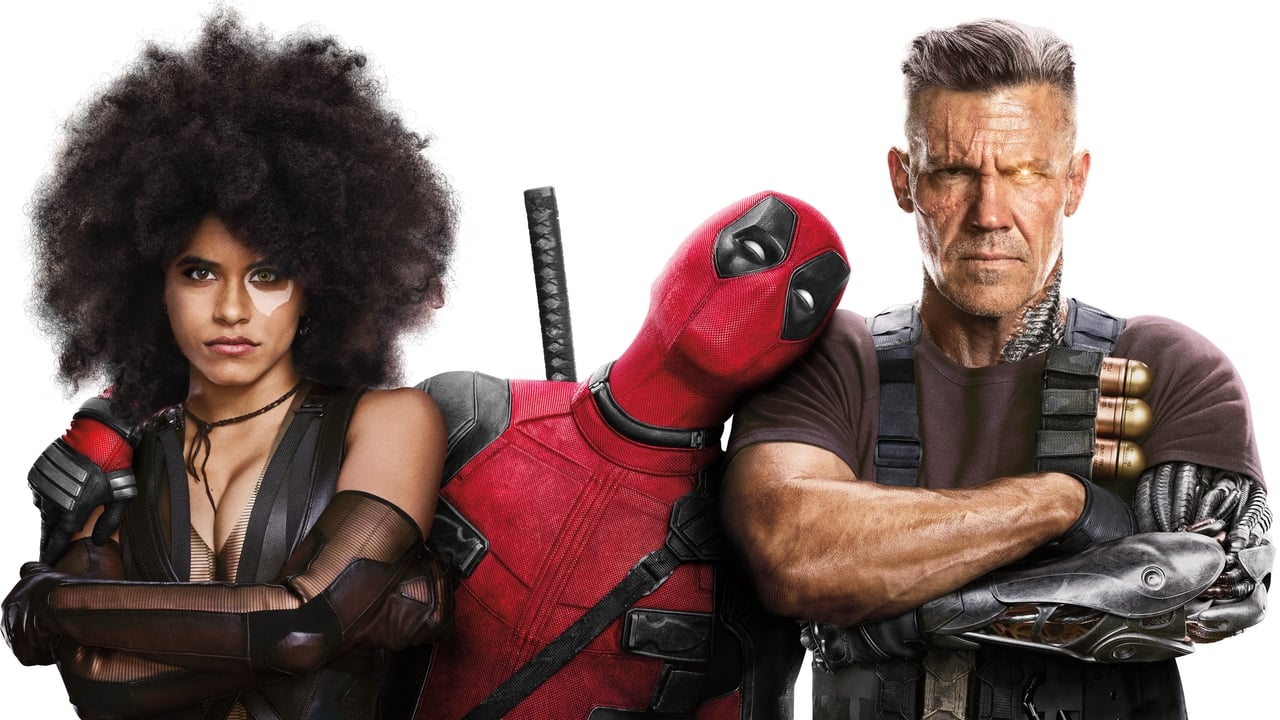
Deadpool 2
Plot & Narrative Analysis
Grief as Architecture
Vanessa’s absence doesn’t merely wound Wade Wilson; it hollows him, stripping the mercenary of the emotional ballast that previously justified his chaos. His early suicide attempt plays with meta-comedy, but beneath the punchlines lies genuine existential drift. From that void, Wade’s purpose mutates from self-annihilation into a clumsy, fiercely protective obsession with Russell. Crucially, Russell is never just a MacGuffin; he operates as the story’s bruised moral compass.
Cable enters as Wade’s precise psychological mirror: both men are temporal orphans, both haunted by the annihilation of a family, and both convinced that love justifies extreme action. Yet Cable’s rigid utilitarianism — willing to collateralize the present to engineer a pristine future — contrasts sharply with Wade’s messy, present-tense empathy.
Their escalating friction gradually reveals that grief isn’t a hierarchy but a crossroads: it can armor you in certainty or fracture you into vulnerability. After the X-Force’s brilliantly futile deployment, the story abandons the lone-wolf martyr template and pivots toward collective care. By tethering Wade’s purpose to a community rather than a ghost, Deadpool 2 argues that healing isn’t about recovering what’s gone, but learning to bear witness alongside others.
“Zip it, Thanos.”— Wade Wilson to Cable, Deadpool 2 (2018)
Thematic Drivers
Grief Without Resolution
The film refuses to neatly resolve Vanessa’s death even with its final-act time-travel twist. Grief here is something you survive by finding what still needs protecting, not by reversing what broke you.
Utilitarianism vs. Empathy
Cable and Deadpool embody two irreconcilable ethical positions. The film doesn’t declare a winner — it shows how both positions require something to die.
Found Family as Earned Institution
X-Force’s catastrophic debut dismantles the idea that assembling a team is automatically meaningful. The family that matters is built slower, tested harder, held together by something more durable than competence.
Key Characters
The Players
Cable is grief weaponized into ideology — a man who has lost his family to a future shaped by violence and has logically concluded that preventing that violence requires committing more of it. He functions as Wade’s foil not in the conventional hero/villain sense but in the philosophical: both men are driven by love, both process loss through force, and neither can see clearly through the smoke of their own righteous certainty. Brolin brings the same laconic authority he brought to Thanos.
Domino’s arrival is the film’s most elegant subversion: luck as a superpower is inherently uncinematic, and the film leans entirely into that absurdity, showing Domino glide through chaos as though the universe has pre-arranged itself for her convenience. Beetz plays her with cool, magnetic authority that makes every X-Force auditionee look like a mistake by comparison — and that’s the point.
Russell is the film’s most honest character: an abused child who has decided that power is the only protection worth having. He is not a villain — he is the argument the film is making about what happens when children learn that care is conditional. Dennison brings volcanic sincerity to the role, making Russell’s anger feel earned rather than melodramatic.
Vanessa’s role is structurally controversial — she dies in the first act and spends the rest of the film as a vision guiding Wade from purgatory. The film uses her absence as the engine and her memory as the compass, half-acknowledging the cliché in its post-credits time-travel rescue. Baccarin brings enough warmth to the brief early scenes that the loss registers as genuine.
Wade in Deadpool 2 is performing recovery while actually drowning. Reynolds has to play comedy as coping mechanism with enough sincerity that the grief underneath registers without the jokes collapsing into bathos. His evolution — from self-annihilating grief to reluctant guardianship — is the franchise’s most complete character movement.
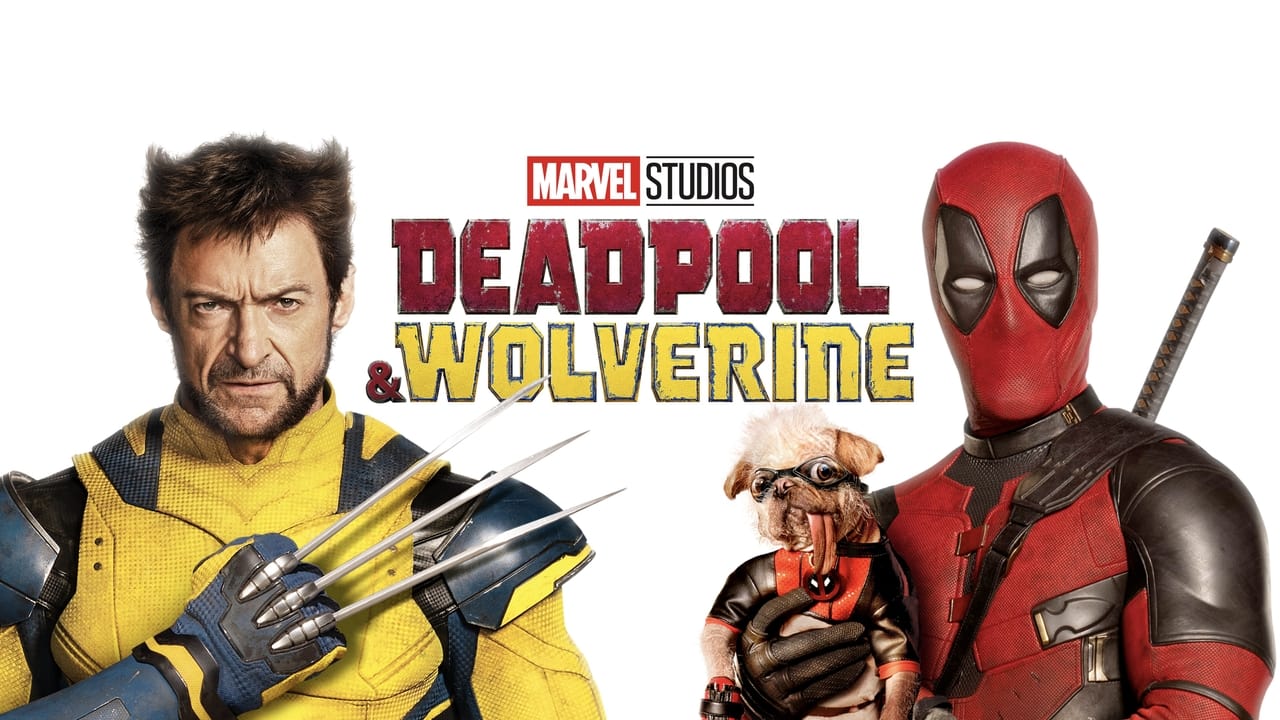
Deadpool & Wolverine
Plot & Narrative Analysis
Legacy, Erasure, and the Right to Try Again
Beneath its meta-textual armor, Deadpool & Wolverine deploys the TVA’s bureaucratic multiverse not as spectacle but as a structural metaphor for legacy and existential drift. The pruning timeline mirrors how artists, characters, and even eras get discarded when they no longer serve a central narrative. The film’s emotional arc tracks a quiet negotiation with irrelevance: Wade’s desperate performance of purpose and Logan’s self-imposed exile both stem from the terror of being forgotten.
That proof hinges entirely on this variant Logan’s failure. Stripped of the grace that capped the 2017 film, he carries the rot of a timeline he couldn’t save, mistaking his own violence for a fixed destiny. Deadpool’s relentless needling functions as catalytic friction, pushing Logan to see that his myth of the unfixable weapon was always a shield. Their dynamic becomes a reciprocal reckoning: Wade learns that legacy demands sincerity, while Logan discovers that purpose isn’t granted by canon — it’s claimed through repeated, costly choice.
Cassandra Nova thematically embodies the genre’s burnout: a nihilistic entity that celebrates the Void as inevitable. The film’s triumphant counterstroke is its unflinching embrace of the Fox era itself — every cameo operates as elegy and affirmation. Levy doesn’t museum-ify the past; he stages a funeral and a resurrection, arguing that even fractured, commercially messy superhero myths retain their pulse when someone still cares enough to bleed for them.
“I’m just a Deadpool standing in front of a Wolverine, asking him to please not let everyone die.”— Wade Wilson, Deadpool & Wolverine (2024)
Thematic Drivers
Institutional Erasure vs. Individual Worth
The TVA’s pruning logic is the film’s central antagonism. Wade and Logan’s journey is a refutation: a story’s worth is not determined by its place in a larger canon but by whether someone inside it chose to fight for it.
The Failure That Defines You
This Wolverine variant is defined by what he didn’t do. The film argues that identity constructed from failure is not shameful; it is the most honest kind of self-knowledge. What matters is what you do with the knowledge that you’ve been tried and found wanting.
Nostalgia as Grief Work
The Fox-era cameos actively grieve a version of superhero cinema the film respects and mourns. By staging these returns in the Void, nostalgia becomes not regression but a necessary confrontation with what the genre has lost in its march toward corporate tidiness.
Key Characters
The Players
Across the trilogy, Wade evolves from self-serving vigilante to emotionally accountable hero, learning that vulnerability — not violence — defines true courage. Here, he becomes a multiversal disruptor, challenging cinematic canon itself to prove his place in a sanitized franchise landscape. Reynolds delivers unparalleled comedic precision and a meta-campaign that has thoroughly blurred the line between actor and character into a single ongoing cultural performance.
This Wolverine is the variant who was weighed and found wanting — the man who abandoned his team and has spent years constructing a theology of his own unworthiness to avoid being tested again. His arc is the film’s emotional center: the question of whether a failed man can earn the right to try. Jackman brings wounded dignity to the role, playing Logan’s reluctance not as stubbornness but as terror.
Cassandra Nova doesn’t want to conquer reality — she wants to demonstrate it isn’t worth saving. As Charles Xavier’s twin sister, discarded before birth, she represents the permanent trauma of institutional erasure and has chosen annihilation as the only coherent response. Corrin plays her with serene menace, a character who is never in a hurry because she has already decided how this ends.
Paradox is the film’s bureaucratic comedy — a TVA agent so captured by institutional logic that he’s lost the capacity to recognize the absurdity of the rules he enforces. Macfadyen brings the same anxious managerial energy he brought to Succession’s Tom Wambsgans: a man performing confidence while knowing he is one decision away from irrelevance.
Laura’s brief appearance in the Void is the film’s most overtly nostalgic gesture — a callback to Logan (2017) that functions as tribute and thematic shorthand. Her presence makes concrete what is at stake in Logan’s choice: not abstract heroism but specific, costly continuity. The restraint of her scene — quiet where the film is usually loud — gives it disproportionate weight.
Across the Trilogy
Franchise Themes
Identity & Self-Creation
The Deadpool trilogy is a sustained meditation on identity as construction rather than essence. Wade Wilson’s body is violated, his face stolen, his narrative repeatedly hijacked by genres that don’t want him — and his response is to keep narrating anyway. Each film asks the same question at a different register: who are you when the story being told about you is not the one you recognize? The answer is not resolution. It is the insistence on authorship, the refusal to let the wound become the final word.
Trauma & Healing
Each film presents a different stage of trauma’s long aftermath. The first shows the violence of the wound and Wade’s attempt to use revenge as a substitute for grieving. The second strips the coping mechanism away and forces him into the harder work of learning to protect rather than punish. The third confronts a man who has built his identity around his wound and must decide whether the identity outlasts the original injury. Across all three, healing is presented not as recovery but as the ongoing act of showing up anyway.
Found Family
The found family theme develops with accumulating complexity. In the first film it is latent — Weasel and Dopinder represent loyalty without formal commitment. In the second it becomes structural — the X-Force experiment fails precisely because it tries to professionalize what only works when genuinely chosen. The third globalizes this: Wade extends chosen loyalty to an entire era of cinema, arguing that what you choose to belong to can outlast the institution that created it.
Genre Deconstruction
Deadpool’s relationship with superhero conventions is dialectical — it requires the genre to be operating at full force to have anything to work against. The first film targets the sanitized origin story. The second targets the team-up and lone-wolf martyr. The third targets the corporate mythology machine itself, staging its argument inside the TVA that literally administers which stories get to exist. Genre deconstruction has become the subject of the franchise rather than its technique.
Mortality & Legacy
Deadpool cannot die, and this is the trilogy’s darkest irony — the one thing he fears most is not death but obsolescence. Each film finds a different workaround: the first makes Vanessa mortal; the second kills her to prove invulnerability doesn’t protect what he loves; the third places his entire timeline under erasure. The franchise argues that legacy is not built by surviving but by what you fight for when survival is no longer the variable — when the only question left is what you were worth.
How Each Film Handles the Central Question
| Film | Identity Question | Grief Stage | Family Status | Genre Target |
|---|---|---|---|---|
| Deadpool (2016) | Can I be loved as this? | Acute wound, revenge as proxy | Pre-existing, dyadic | Origin story formula |
| Deadpool 2 (2018) | What am I without her? | Loss, search for purpose | Assembling, tested | Team-up / lone martyr |
| Deadpool & Wolverine (2024) | Does my story deserve to exist? | Institutional erasure, nostalgia | Extended to an era | Corporate mythology machine |